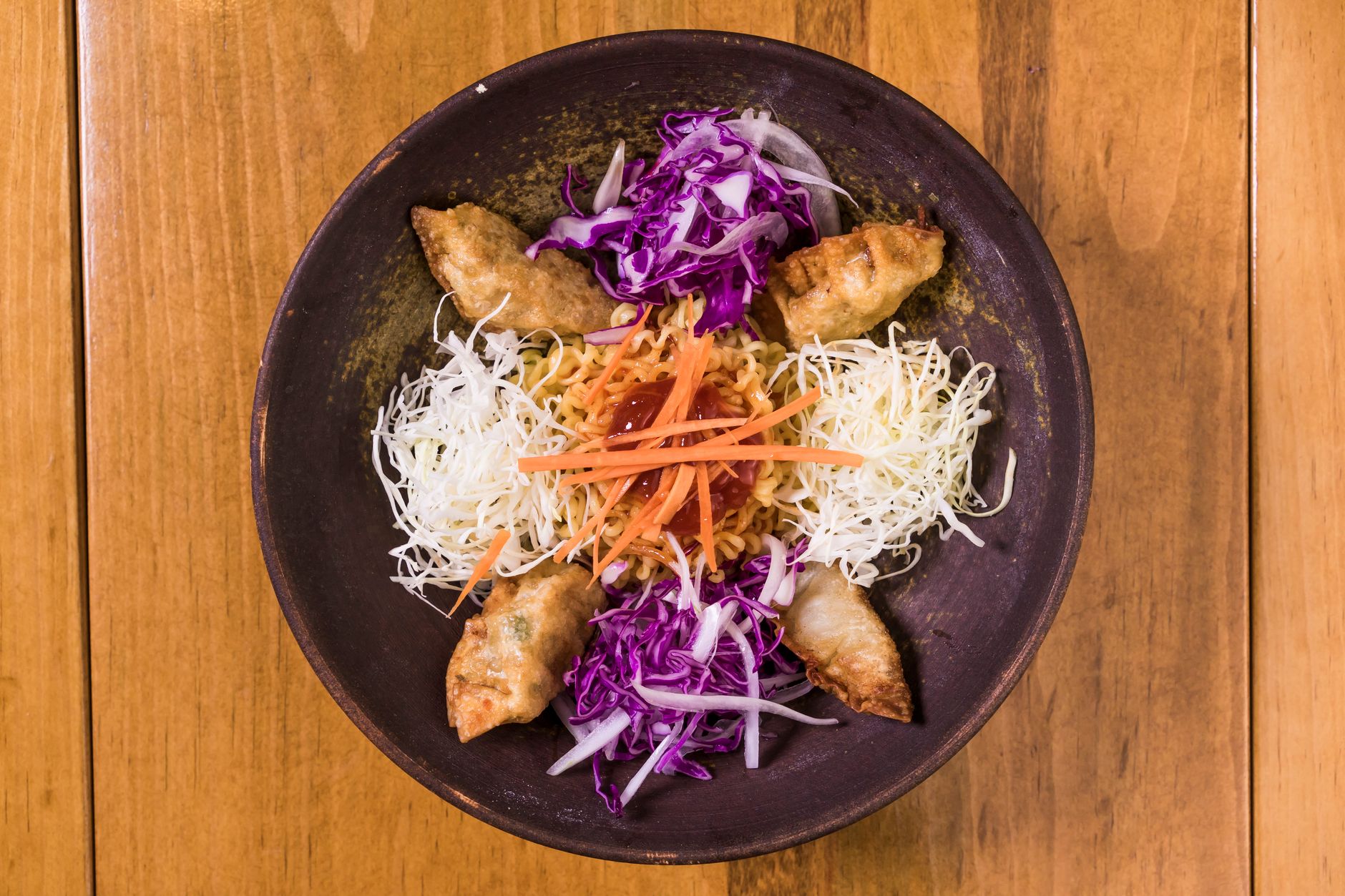
Traditional Korean food follows centuries-old recipes built on fermentation, communal sharing, and staple ingredients like doenjang, gochujang, and kimchi. Korean fusion borrows those bold flavors and remixes them with global techniques and ingredients. At 8282 in the Lower East Side, dishes like boneless Korean fried chicken in sticky garlic-soy show exactly how fusion elevates tradition without erasing it.
Traditional Korean food follows centuries-old recipes built on fermentation, communal sharing, and staple ingredients like doenjang, gochujang, and kimchi. Korean fusion borrows those bold flavors and remixes them with global techniques and ingredients. In our experience, the key to successful fusion is respecting the original pantry while treating technique as a playground for creativity. At 8282 in the Lower East Side, dishes like boneless Korean fried chicken in sticky garlic-soy show exactly how fusion elevates tradition without erasing it.
What Is Traditional Korean Food, and What Defines It?
Traditional Korean cuisine is one of the most historically layered food cultures in the world. Korean fermentation practices date back over 3,000 years (tastekoreanfood.com), and the formal structure of Korean court cooking was codified during the Joseon Dynasty (1392-1910), which UNESCO now recognizes as the foundation of today's traditional table (ich.unesco.org). Royal cuisine alone comprised nearly 350 main dishes, side dishes, rice cakes, desserts, and beverages (ich.unesco.org). That breadth explains why traditional Korean food resists reduction to a single dish or technique. It is a system of cooking, not a menu.
The philosophical heart of traditional Korean dining is called jeong, a concept roughly translated as emotional warmth expressed through food. Meals are communal events. Dishes arrive simultaneously at the table, and eating is understood as a shared act. This communal logic shapes everything: portion sizes, the role of banchan as equalizers at the table, and the expectation that no single diner commands the meal. Traditional Korean food prioritizes continuity, while fusion emphasizes deliberate reinterpretation and cross-cultural blending (chinese1.visitkorea.or.kr).
What Are the Core Ingredients That Define Traditional Korean Cooking?
The flavor backbone of traditional Korean cooking rests on three fermented staples: gochujang (fermented chili paste), doenjang (fermented soybean paste), and soy sauce. Sesame oil, garlic, and ginger appear in nearly every preparation. These are not interchangeable flavors; each plays a structural role. Doenjang delivers deep, slow umami. Gochujang contributes heat, sweetness, and a rounded acidity that no fresh chili replicates. Together they create a layered complexity that takes time to develop. Our team has found that understanding this fermentation depth is essential before we can confidently reimagine it through fusion methods. Our team has found that understanding this fermentation depth is essential before we can confidently reimagine it through fusion methods. Kimchi alone has over 200 documented regional varieties, and its fermentation process begins with a salt-brine stage that creates approximately 2-3% salinity, the environment where beneficial Lactobacillus bacteria thrive while harmful bacteria cannot survive (tastekoreanfood.com). Kimjang, the communal practice of making and sharing kimchi, was inscribed on UNESCO's Representative List of Intangible Cultural Heritage in 2013 (ich.unesco.org). Rice and barley are the primary carbohydrate staples. The carbohydrate is not a side dish; it is the structural center that banchan orbits.
What Are the Most Iconic Traditional Korean Dishes?
The canon of traditional Korean dishes is wide. Bibimbap, a mixed rice bowl topped with seasonal vegetables, egg, and gochujang, is among the most recognized globally. Doenjang jjigae, a fermented soybean paste stew with tofu and vegetables, is a daily staple in Korean households. Galbi and bulgogi represent Korea's grilling tradition, where marinated beef is cooked at the table in a ritual that turns the meal into participatory cooking. Japchae, glass noodles stir-fried with vegetables and soy sauce, and sundubu jjigae, a soft tofu stew with seafood or pork, round out the core repertoire. Each dish reflects a principle: balance between salty, spicy, sour, and sweet, achieved through fermentation and slow technique rather than cream, butter, or fat-forward cooking.
Regional Variation Inside Traditional Korean Cuisine
Traditional Korean cuisine has always evolved through regional exchange and adaptation, and that internal diversity is one of the least-covered aspects of the tradition in English-language food writing. Jeolla Province in the southwest is considered Korea's culinary heartland, producing the most elaborate banchan spreads in the country. Jeonju bibimbap, the Jeolla version, uses a specific variety of bean sprout and is served in a stone bowl heated to crisp the bottom rice layer, a textural technique absent from Seoul-style versions. Gangwon Province in the northeast, mountainous and cold, produces a cuisine built around buckwheat, potato starch noodles (makguksu), and preserved fish. Seoul-style or Gyeonggi cooking sits somewhere in the middle: less intensely seasoned than Jeolla, less austere than Gangwon. The Korean War period (1950-1953) further scrambled regional food cultures as populations displaced across the peninsula, accelerating cross-regional blending that continues today (markyana.com). Chili peppers themselves only arrived in the 16th century (markyana.com), transforming a cuisine that had fermented vegetables without heat for millennia. Regional variation is not a modern invention. It is baked into the tradition.
What Is Korean Fusion Food, and How Does It Differ from the Tradition?
Korean fusion deliberately applies Korean flavors, spices, or fermented condiments to dishes rooted in other culinary traditions, or works in reverse by applying Western or Asian techniques to Korean ingredients in unexpected ways. Traditional Korean food follows established Korean recipes, ingredients, techniques, and meal customs, while Korean fusion uses Korean flavors or ingredients in new combinations with another cuisine's ingredients, techniques, or formats (blog.eightwoeightwo.com). Traditional food uses regional, seasonal ingredients while fusion combines Korean ingredients with ingredients from other cuisines (blog.eightwoeightwo.com). The result is not a lesser version of Korean food. At 8282, we believe Korean fusion is a different project entirely, one that asks what gochujang can do inside a margarita or what dakgalbi tastes like when it anchors a crispy kimchi-bap with melted cheese. Korean fusion is a different project entirely: it asks what gochujang can do inside a margarita, what dakgalbi tastes like when it anchors a crispy kimchi-bap with melted cheese. The global appetite for this project is measurable. In 2024, K-Food Plus exports reached a record USD 13.03 billion (gourmetpro.co), and the US Korean restaurant market now generates $8.1 billion annually (wifitalents.com). Gochujang exports grow 15% annually (wifitalents.com), tracking directly with fusion's expansion.
How 8282 on the Lower East Side Exemplifies Korean Fusion
At 8282, we have thought hard about what Korean fusion means in practice at 84 Stanton St, New York, NY 10002. The Michelin Guide describes us as "a rambunctious little restaurant in the Lower East Side" whose team "springboards into uncharted waters" with "creative, bold dishes that beg to be shared." That Bib Gourmand recognition, held since 2023, is specific: it signals outstanding value alongside quality, not just culinary novelty. Our boneless Korean fried chicken arrives in a sticky garlic-soy glaze that reads familiar, then surprises. The cheesy dakgalbi kimchi-bap demonstrates technical Korean cooking knowledge rather than surface-level trend-chasing. The gochujang margarita, praised by The Infatuation, is the clearest example of our method: a classic tequila-lime base encounters Korea's most essential fermented paste, and the result is a cocktail that works as both introduction and discovery for diners at every level of Korean food familiarity. With 348+ Yelp reviews and a 5.0/5 Tripadvisor rating, the execution has proven consistent, not a hype cycle. We are open Monday through Thursday and Sunday from 5:30 PM to 10:30 PM, and Friday through Saturday from 5:30 PM to 11:30 PM. Reservations are on Resy.
!Shared plates spread at 8282, Lower East Side Korean fusion restaurant Ready to go? Book a table at 8282. A shared-plates table spread at 8282 on the Lower East Side. Photo: 8282
Korean Fusion vs. Traditional Korean: A Side-by-Side Comparison
Both styles share the same pantry origin: gochujang, doenjang, soy sauce, sesame oil, garlic, and fermented vegetables. The divergence is in philosophy and execution. Traditional Korean food earns its flavor through fermentation time and layered seasoning applied over generations. Fusion shortcuts or amplifies that flavor through technique crossover, pairing the Korean pantry with different heat sources, formats, and service styles. Ambiance also separates them sharply. Traditional Korean dining rooms tend toward bright, practical, and loud with grill smoke. Fusion venues like 8282 in the Lower East Side tend toward intimate, designed interiors suited for two-person conversations.
Comparison Table: Korean Fusion vs. Traditional Korean Food
The table below covers the dimensions that matter most when choosing between styles for a specific occasion.
What Are the Pros and Cons of Each Style for Diners?
Choosing between traditional Korean food and Korean fusion is not a question of authenticity. It is a question of occasion, budget, and how much prior familiarity a diner brings. Both styles have real strengths and real limitations, and knowing them changes how you plan a meal in New York City.
Traditional Korean food's greatest strength is depth. The communal table, the banchan variety, the grilled proteins cooked in front of you: all of it creates a culturally immersive experience that no fusion concept fully replicates. Vegetable-forward options are wide, driven by centuries of Buddhist culinary influence during the Goryeo Dynasty (918-1392) (markyana.com). The limitation is real, though. Across the US, 72% of Gen Z consumers have now tried Korean food at least once (wifitalents.com), which suggests familiarity is growing, but the entry barrier to formal traditional dining remains.
Which Style Is Better for a Date Night in NYC?
Korean fusion venues outperform traditional Korean restaurants on date-night dimensions consistently. Intimate lighting, quieter rooms, craft cocktail programs, and small-plates formats all favor the conversation a two-person dinner requires. At 8282, we address the specific pain point of wanting Korean-inspired food that goes beyond bibimbap and BBQ without losing approachability. A concrete scenario: two diners on a first proper date in the Lower East Side who want to signal food curiosity without spending $350 (ich.unesco.org) between them will find that 8282 solves every variable. The gochujang margarita arrives first and functions as a conversation starter. The boneless Korean fried chicken and cheesy dakgalbi kimchi-bap arrive as shared plates, which creates the natural intimacy of passing food. Traditional Korean BBQ is excellent for groups but the communal grill logistics, the noise, and the bright overhead lighting make it a poor fit for intimate two-person dinners. The data supports this: 73% (bidfood.co.uk) of consumers eating out would be likely to try new cuisines if they were presented in small plates format, which is exactly the format Korean fusion restaurants use and traditional BBQ halls do not.
Traditional Korean: Pros
- Deeply authentic, culturally immersive experience
- Enormous variety of vegetable-forward and fermented options
- Ideal for groups and family-style celebration meals
- Wide price range from accessible Koreatown BBQ to Atomix-level fine dining
Traditional Korean: Cons
- Can feel intimidating for banchan-unfamiliar first-timers
- High-end traditional venues require significant budget and advance planning
- Korean BBQ noise and grill logistics work against intimate dining
Korean Fusion: Pros
- Lower entry barrier for diners new to Korean flavors
- Better suited to date-night and special-occasion intimate formats
- Creative experimentation without losing pantry authenticity
- Michelin Bib Gourmand value at 8282 removes budget anxiety
Korean Fusion: Cons
- Quality varies across operators; some sacrifice depth for novelty
- Purists may find certain remixes disconnected from the tradition
- Smaller restaurant footprints can mean wait times and limited walk-ins
Where to Eat Korean Fusion or Traditional Korean in NYC
New York City has the widest range of Korean dining options in the United States, and knowing where to go for each style changes the quality of the experience significantly. We have clear opinions on this, shaped by being part of the Lower East Side dining corridor ourselves.
For Korean fusion, 8282 at 84 Stanton St in the Lower East Side is our recommendation first. Wildair, also in the Lower East Side, is a natural wine bar with creative small plates that attracts the same food-curious crowd. Dirt Candy on the LES offers a vegetarian tasting menu that draws the same progressive food audience. Le French Diner, another LES neighbor, rounds out the date-night corridor for diners who want comparison context.
For traditional Korean, the range is wide. Atoboy in the Flatiron district occupies a strong middle ground between tradition and accessibility, with approachable Korean small plates that maintain traditional flavor logic. Koreatown on West 32nd Street remains the most concentrated cluster of traditional Korean BBQ in Manhattan, with accessible price points and the full communal BBQ experience. Dhamaka in the Lower East Side is South Asian rather than Korean, but it occupies the same chef-driven, ingredient-serious dining corridor as 8282 and pairs well as a neighborhood context restaurant for the same food-curious diner.
Why 8282 Stands Out Among NYC Korean Fusion Options
Michelin Bib Gourmand is a specific designation: it does not simply reward quality but outstanding value relative to quality. The intimate room at 84 Stanton St creates a dining experience that feels personal rather than corporate, which matters for the diner who has grown tired of generic LES restaurants that prioritize scene over food. The gochujang margarita functions as an entry point: even diners who have never encountered Korean fermented chili paste can meet it through a familiar cocktail format. The cheesy dakgalbi kimchi-bap demonstrates that our kitchen understands the technical Korean cooking it is modifying, not just applying Korean labels to unrelated dishes. The Infatuation recommends 8282 specifically for its flavor commitment rather than hype, which is the kind of endorsement that holds over time. Reservations are available on Resy. We can be reached at +1 929 837 0360.
Verdict: Which Style Should You Choose?
Choose traditional Korean food when you are feeding a group, pursuing cultural immersion, or celebrating a milestone with the budget for Atomix-level fine dining. The communal structure, the banchan variety, and the fermentation depth reward diners who have time and company to experience it properly.
For example, imagine a couple in their early thirties on a second date who want to impress without overspending: they book 8282 on a Friday, order the gochujang margarita and boneless Korean fried chicken to share, and find themselves in a quiet room where actual conversation happens, all for under $100 combined with drinks. That scenario plays out regularly at 8282 because the format and price point remove the decision friction that kills special occasions. At 8282, we built the menu specifically for that diner. The flavor is Korean. The format is accessible. The quality is Michelin-documented. That combination is hard to find in Manhattan, and we think it is worth your reservation. You can see the anju and banju on 8282's menu.
Frequently Asked Questions
Is Korean fusion food authentic, or does it water down traditional Korean flavors?
What is the Michelin Bib Gourmand, and why does it matter for Korean fusion restaurants like 8282?
What are the best Korean fusion restaurants in New York City right now?
Can you enjoy Korean fusion food if you have never tried traditional Korean cuisine before?
What is the difference between Korean fusion and Korean BBQ?
Sources & References
- Kimchi Fermentation Process and the Cultural Significance of Kimjang Traditions (opens in a new tab)[industry]
- Food And Drink Trends 2026 | Flavours Less Travelled | Korean (opens in a new tab)[industry]
- Korean Cuisine Outlook 2026: 6 Insights for Global F&B Brands (opens in a new tab)[industry]
- Decision of the Intergovernmental Committee: 6.COM 13.42 - UNESCO Intangible Cultural Heritage (opens in a new tab)[org]
- Kimjang, making and sharing kimchi in the Republic of Korea - UNESCO Intangible Cultural Heritage (opens in a new tab)[org]
- Korean Food History: Origins of 15 Classic Dishes - Markyana (opens in a new tab)[industry]
- Korean Restaurant Industry Statistics | Verified 2026 Data (opens in a new tab)[industry]
- Korean Fusion Dining Lower East Side: What to Expect - 8282 Blog (opens in a new tab)[industry]
About the Author
8282
8282 is a Michelin Bib Gourmand Korean fusion restaurant on Manhattan's Lower East Side, renowned for intimate, inventive cuisine and unforgettable date night experiences.
Learn more at www.eightwoeightwo.com → (opens in a new tab)Related Posts
Chef-Driven vs. Corporate Restaurant Groups: Which Makes a Better Date Night in NYC?
Not all NYC date nights are created equal. Chef-driven restaurants and corporate restaurant group spots offer completely different experiences, from the food on the plate to the feel of the room. Here is how to choose the right one for your evening.
12 min read
How to Plan the Perfect NYC Date Night From Start to Finish
Planning a great date night in New York City takes more than a dinner reservation. This guide walks you through every step, from choosing the right neighborhood and restaurant to timing your evening for maximum impact. Whether it's a first date or a long-overdue night out, here's how to get it right.
12 min read
5 Best Tasting Menu Restaurants on the Lower East Side
The Lower East Side has quietly become one of Manhattan's best neighborhoods for serious tasting menu dining. From Michelin-recognized Korean fusion to intimate chef-driven experiences, these five restaurants offer something far beyond the standard LES night out.
14 min read