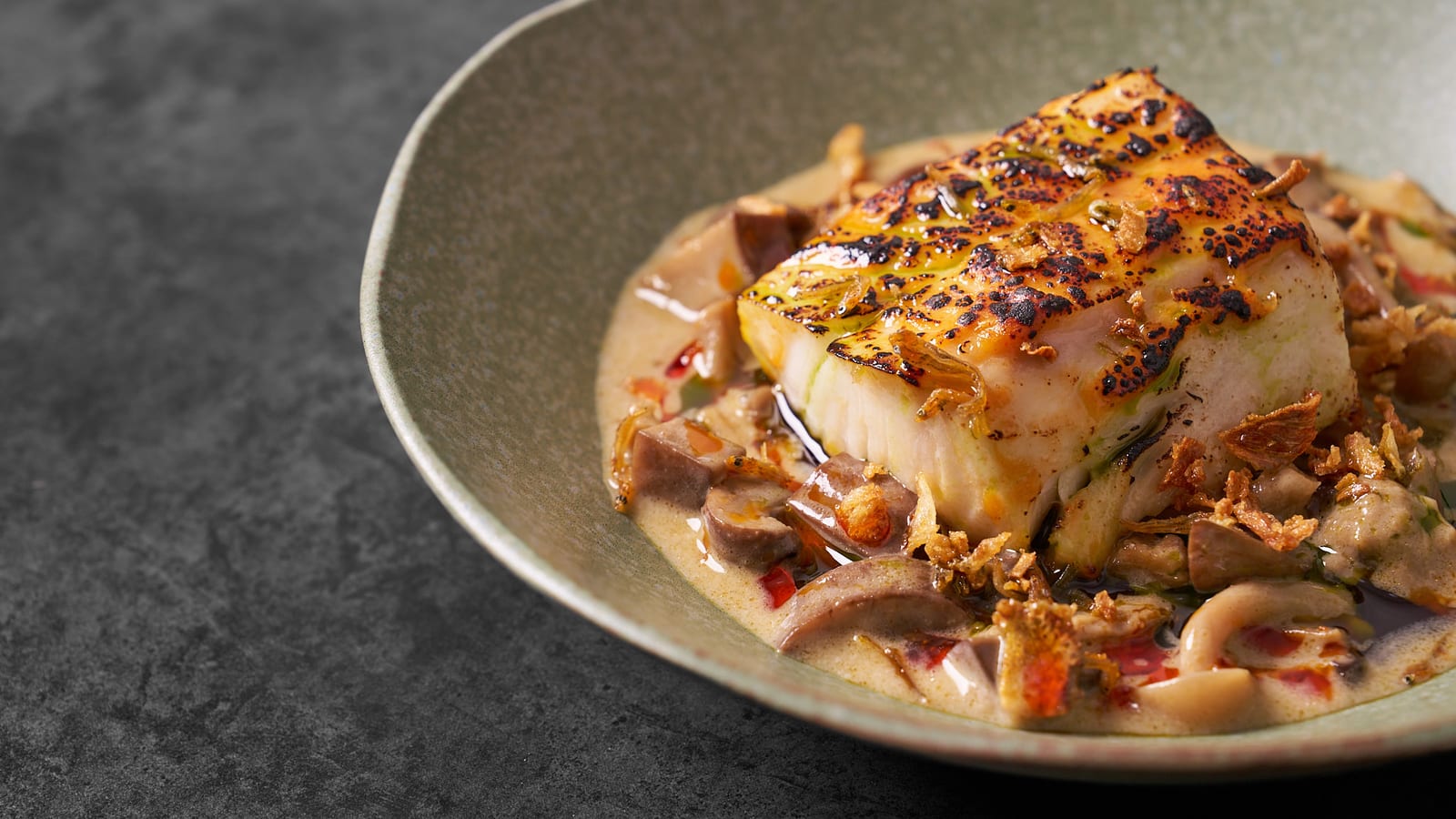
Korean Food in NYC Beyond BBQ: The New Wave of Korean Fusion Restaurants
8282, a Michelin Bib Gourmand Korean fusion spot at 84 Stanton St, New York, NY 10002 on the Lower East Side, is the standout pick for New York's new wave of Korean dining. The city's Korean fusion scene now spans Michelin-recognized tasting menus, inventive small plates, and creative cocktail programs rooted in Korean flavors.
Why Korean Fusion Is Having a Major Moment in NYC Right Now
New York City's Korean dining scene has moved decisively beyond the communal grill table. The shift is structural, not cyclical. South Korean restaurant locations in the U.S. grew 10% over the past year (circana.com), and the cultural infrastructure driving that growth, streaming platforms, K-pop, and food media, has created genuine mainstream curiosity about Korean cuisine in its full complexity. New York diners who once only knew Korean food as BBQ are now actively seeking tasting menus, refined small plates, and hybrid concepts that feel both culturally rooted and culinarily inventive.
How Korean-American Chefs Are Reshaping the NYC Restaurant Landscape
The defining characteristic of this new wave is specificity. Second- and third-generation Korean-American chefs trained at top culinary programs are opening restaurants that feel personal rather than generically pan-Asian. Their menus draw from real family memory, Korean pantry staples, and fine-dining technique developed in some of New York's most rigorous kitchens. The result is food that carries biographical weight. A gochujang glaze on a locally sourced protein is not just a trend move; it is a chef articulating a specific cultural inheritance through a trained culinary lens.
That kind of intentionality is precisely what separates serious chef-driven Korean-American restaurants from trend-chasing imitations. New York currently has 358 Michelin-recognized restaurants (storymaps.arcgis.com), and the Korean fusion spots earning recognition in that company are doing so on the strength of genuine culinary vision.
What Role Has the Lower East Side Played in This Movement
The Lower East Side is not an accidental home for this cuisine. The neighborhood carries a century of immigrant food history, and its ongoing evolution from bar-heavy nightlife district to chef-driven dining corridor has created the conditions Korean-American chefs need. Lower real estate costs relative to Midtown allow smaller, more personal dining rooms. Tighter spaces enable tighter menus. The LES rewards chefs who want to run a restaurant that reflects a point of view rather than a concept designed by committee. Walking distance between several chef-driven concepts also means that a full LES evening, drinks, dinner, a post-meal stop, is a coherent plan rather than a logistical challenge.
What Makes Korean Fusion Different From Traditional Korean Dining
Traditional Korean dining is built around communal formats: a central protein, a spread of banchan (small side dishes), rice, and fermented staples like kimchi and doenjang that provide the funky backbone of the meal. Korean fusion operates differently. Small plates replace the communal spread, allowing for a tasting-style progression that mirrors how Western fine dining moves a guest through a meal. The fermented flavor principles remain. Gochujang, sesame oil, perilla leaf, and makgeolli still anchor the cooking. What changes is format, presentation, and ingredient sourcing.
Kimchi exports grew 5.2% in 2024 (gourmetpro.co), a signal that global audiences are developing real familiarity with fermented Korean flavors beyond restaurant walls. That familiarity makes Korean fusion menus more legible to first-time diners than they would have been even five years ago.
Which Korean Ingredients Appear Most Often in Fusion Menus
Gochujang is the most widely adopted Korean ingredient in non-Korean kitchens globally. On serious Korean fusion menus in Manhattan, the list goes deeper. Doenjang (fermented soybean paste) anchors broths and glazes with an umami depth that rivals miso but carries a distinctly Korean character. Perilla leaf appears as a fresh garnish, an infused oil, or a wrapped bite. Sesame oil shows up in vinaigrettes and finishing sauces. Makgeolli, Korean rice wine, finds its way into both cocktail programs and braising liquids. Kimchi has moved far beyond banchan: kimchi butter, kimchi vinaigrette, and kimchi-braised proteins have all become standard applications in skilled kitchens.
The Best Korean Fusion Restaurants in NYC Worth Knowing in 2026
New York City's current Korean fusion landscape spans multiple price points, neighborhoods, and culinary philosophies. At the top end, omakase-style Korean tasting counters offer experiences that compete directly with the city's best Japanese and contemporary American tasting menus. At the accessible end, Michelin Bib Gourmand spots like 8282 on the Lower East Side offer the same caliber of culinary thinking without the steep price tag. The range is real, and the restaurants below represent the full width of it.
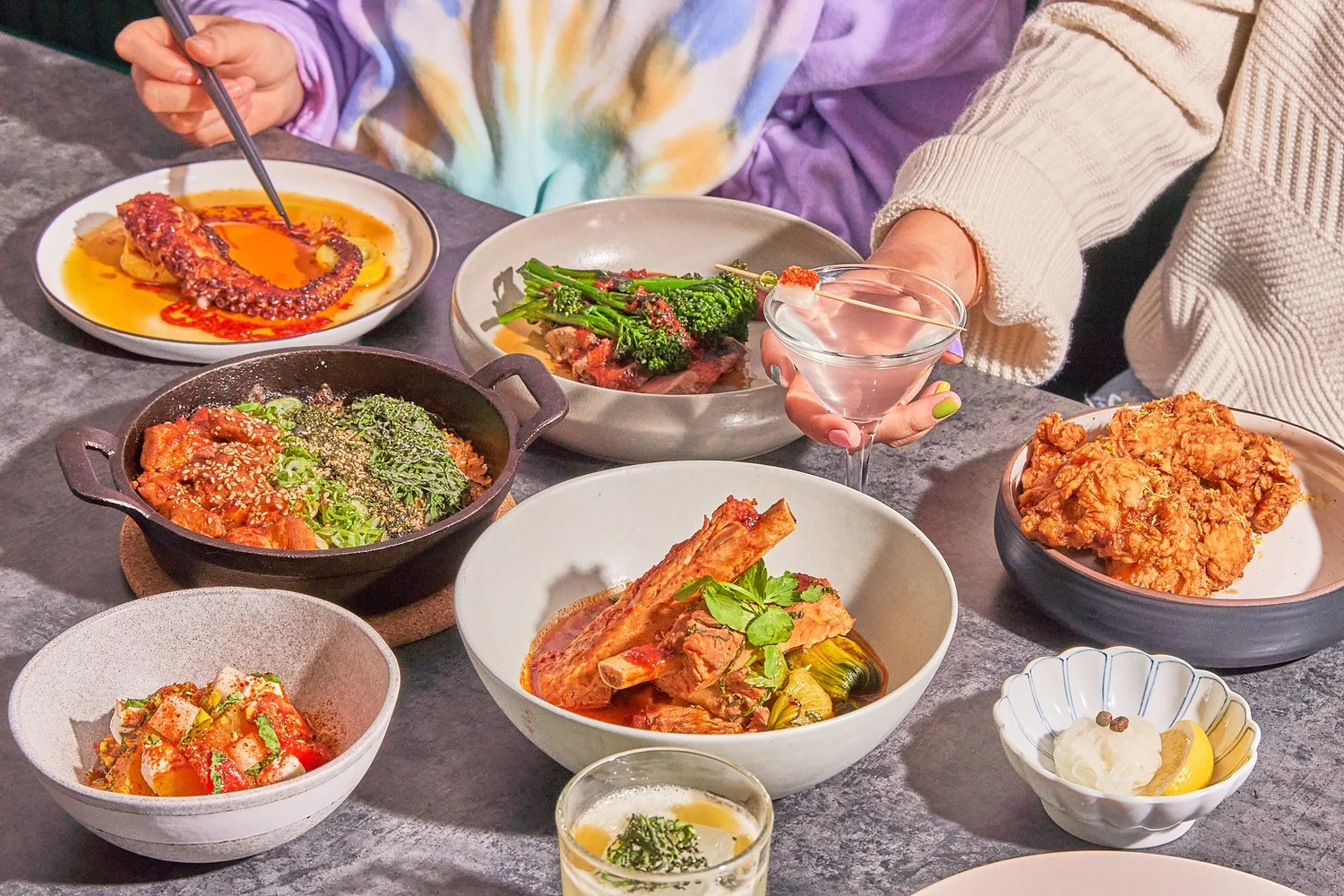 A shared-plates spread at 8282, the format the Michelin Guide calls "creative, bold dishes that beg to be shared." Photo: 8282
8282 (Lower East Side)
The Michelin Guide describes 8282 as "a rambunctious little restaurant in the Lower East Side" whose team "springboards into uncharted waters" with "creative, bold dishes, all of which beg to be shared." That Bib Gourmand designation, awarded by the same anonymous inspectors who grant stars, signals exceptional value in a city with 358 Michelin-recognized restaurants.
The Infatuation praises the gochujang margarita, the boneless Korean fried chicken tossed in sticky garlic-soy, and the cheesy dakgalbi kimchi-bap. The room is small and cozy, usually full of couples, with K-pop playing. The restaurant's name reads as "ppali ppali" in Korean, meaning "hurry hurry," a detail that grounds the concept in lived cultural experience rather than brand strategy.
8282 is at 84 Stanton St. Reservations are available via Resy; walk-ins at the bar when available.
Kisa (Lower East Side)
Kisa brings a different register to the LES Korean conversation. The restaurant is inspired by Seoul taxi-driver diners, the kind of no-frills, high-flavor spots that feed working people efficiently and deliciously. The diner-style format is a deliberate counterpoint to the tasting-menu trend, and it reflects a genuine strand of Korean food culture that fusion restaurants sometimes overlook. Kisa is worth knowing precisely because it expands the definition of what Korean food beyond BBQ can mean.
Atomix and Atoboy (Midtown / NoMad)
Atomix represents the pinnacle of Korean fine dining in New York, a Michelin-starred tasting counter among the city's most decorated restaurants. The experience is formal, immersive, and built around Korean culinary tradition expressed through a rigorous tasting-menu format. Atoboy, from the same team, holds a Michelin Bib Gourmand and offers Korean shared plates in a more relaxed setting. Together they demonstrate the full range one kitchen team can command across formats and price points.
Oiji Mi and Cote (Flatiron)
Oiji Mi is a Michelin-starred modern Korean restaurant in Flatiron where the cooking draws on traditional Korean technique and applies it to a refined small-plates format. Cote, also Michelin-starred and also in Flatiron, operates as a Korean steakhouse, fusing the communal BBQ tradition with the service standards and dry-aged beef program of a serious American steakhouse. Both restaurants demonstrate that Korean cuisine competes at the top of Manhattan's fine-dining tier, not as a novelty category but as a peer.
Casa Mono (Gramercy)
Casa Mono is a Michelin-starred Spanish shared-plates restaurant in Gramercy. It belongs on this list not as a Korean restaurant but as a useful reference point: Casa Mono has spent years demonstrating that a small, chef-driven shared-plates room built around a specific culinary tradition can earn and hold serious critical recognition in New York. The format, the philosophy, and the critical trajectory are instructive for anyone trying to understand why Korean fusion restaurants are succeeding in the same city. Ready to go? Book a table at 8282.
How to Plan the Perfect Korean Fusion Evening in NYC
Date-night dining in Manhattan requires balancing atmosphere, food quality, price, and reservation accessibility. Most hyped NYC restaurants fail on at least one of those four. Michelin Bib Gourmand restaurants solve the price problem directly. Food-away-from-home prices are forecast to rise 4.6% in 2026 (extension.psu.edu), which means the value signal of a Bib Gourmand designation matters more this year than it did three years ago.
For an evening anchored on the Lower East Side, the strategy is straightforward. Start with drinks before dinner. Wildair on Orchard Street is a natural-wine bar with creative shareable small plates that works well as a pre-dinner stop. Attaboy on Eldridge Street is a celebrated no-menu cocktail bar where the bartenders build drinks around your stated preferences. Bar Goto, also on Eldridge Street, offers Japanese-inspired cocktails in a quieter, more intimate room. Double Chicken Please on the LES is an award-winning cocktail bar with a serious food menu if you want something more substantial before or after dinner.
Book 8282 for Tuesday through Thursday, when availability is meaningfully better than weekends. Enable real-time notifications on Resy to catch cancellations within 24 to 48 hours of a weekend slot you want. Bar seats at a small chef-driven room frequently offer the same menu and a better view of the kitchen.
After dinner, the LES density rewards continued exploration. Cervo's is a seafood-driven, Portuguese and Spanish-inflected restaurant known for fried shrimp heads and natural wine, worth knowing if you want to extend the evening with another round of small plates. The neighborhood makes a layered night easy without crossing a borough.
What Makes a Restaurant Actually Good for a Date Night
Noise level is the most commonly cited complaint about date-night dining in Manhattan. A room with hard surfaces and a playlist turned up for atmosphere is a conversation killer regardless of food quality. Look for rooms with acoustic consideration built into the design. Lighting matters. Pacing of service matters. A small-plates format encourages sharing and generates natural conversation without the awkward formality of a three-course prix-fixe.
A restaurant with genuine culinary credibility signals taste and effort in a way a social-media-famous spot rarely does. A Michelin Bib Gourmand reservation communicates that you researched rather than just Googled "good restaurants near me."
The Korean Fusion Spectrum: From Omakase to Diner-Style
Two specific Korean fusion formats deserve closer attention because they reflect the full range of where this cuisine is going in New York.
At the top end, Korean omakase counters in Manhattan have emerged as serious competitors to Japanese tasting experiences. A multi-course Korean tasting counter might move through raw preparations, fermented vegetables, grilled proteins finished with perilla oil, and a dessert built around rice or red bean, each course guided by chef-driven intentionality. Atomix operates at this level. This is the format that places Korean cuisine in direct conversation with fine dining as a peer, not a novelty.
At the other end, restaurants like Kisa reclaim the everyday Korean dining tradition: high-flavor, unpretentious, built for people who eat seriously without performing it. Between those poles sits the Bib Gourmand tier, where 8282 operates. Creative, bold, shareable dishes in a cozy room at a price point that does not require a special occasion. The Michelin Guide's description of 8282 as a team that "springboards into uncharted waters" captures what this middle tier does best: genuine culinary ambition without the formality or the price escalation of a tasting menu.
The global fusion flavor ingredients market is projected to grow at a CAGR of 5.63% from 2026 to 2032 (stellarmr.com), which means the ingredient infrastructure supporting creative Korean fusion menus will only deepen over the coming years. For New York diners, that means more options, more specificity, and more reasons to move beyond BBQ. You can see the anju and banju on 8282's menu.
Frequently Asked Questions
What is the difference between Korean BBQ and Korean fusion cuisine?
Is 8282 good for a first date in NYC?
How much does dinner at a Michelin Bib Gourmand restaurant in NYC typically cost?
What neighborhoods in NYC have the best Korean fusion restaurants?
Do I need a reservation at Korean fusion restaurants on the Lower East Side?
What Korean dishes should a first-time diner try at a fusion restaurant?
Is Korean fusion food spicy? Can I request milder dishes?
What does Michelin Bib Gourmand mean, and why does it matter for NYC diners?
What are the best Korean fusion restaurants in NYC right now?
Which NYC Korean restaurants have Michelin recognition?
Where can I find Korean tasting menus in Manhattan?
Are there good Korean waterfront or Brooklyn restaurants?
What are the top Korean restaurants in Queens beyond BBQ?
Where is 8282 located, what are its hours, and does it accept credit cards?
Sources & References
- Penn State Extension: Food Trends 2026 (opens in a new tab)[edu]
- ArcGIS StoryMaps: Michelin Restaurant Distribution in New York City (opens in a new tab)[org]
- GourmetPro: Korean Cuisine Outlook 2026 (opens in a new tab)[industry]
- MICHELIN Guide: New York City Summer Restaurant Week 2026 (opens in a new tab)[industry]
- Stellar Market Research: Fusion Flavor Ingredients Market (opens in a new tab)[industry]
- Circana: South Korean Restaurant Locations in the U.S. Grow 10% (opens in a new tab)[industry]
- TNI Restaurant Consultants: The Ultimate Guide to 2026 Restaurant and Food Trends (opens in a new tab)[industry]
- gourmetpro.co (opens in a new tab)[industry]
About the Author
8282
8282 is a Michelin Bib Gourmand Korean fusion restaurant on Manhattan's Lower East Side, renowned for intimate, inventive cuisine and unforgettable date night experiences.
Learn more at www.eightwoeightwo.com → (opens in a new tab)Related Posts
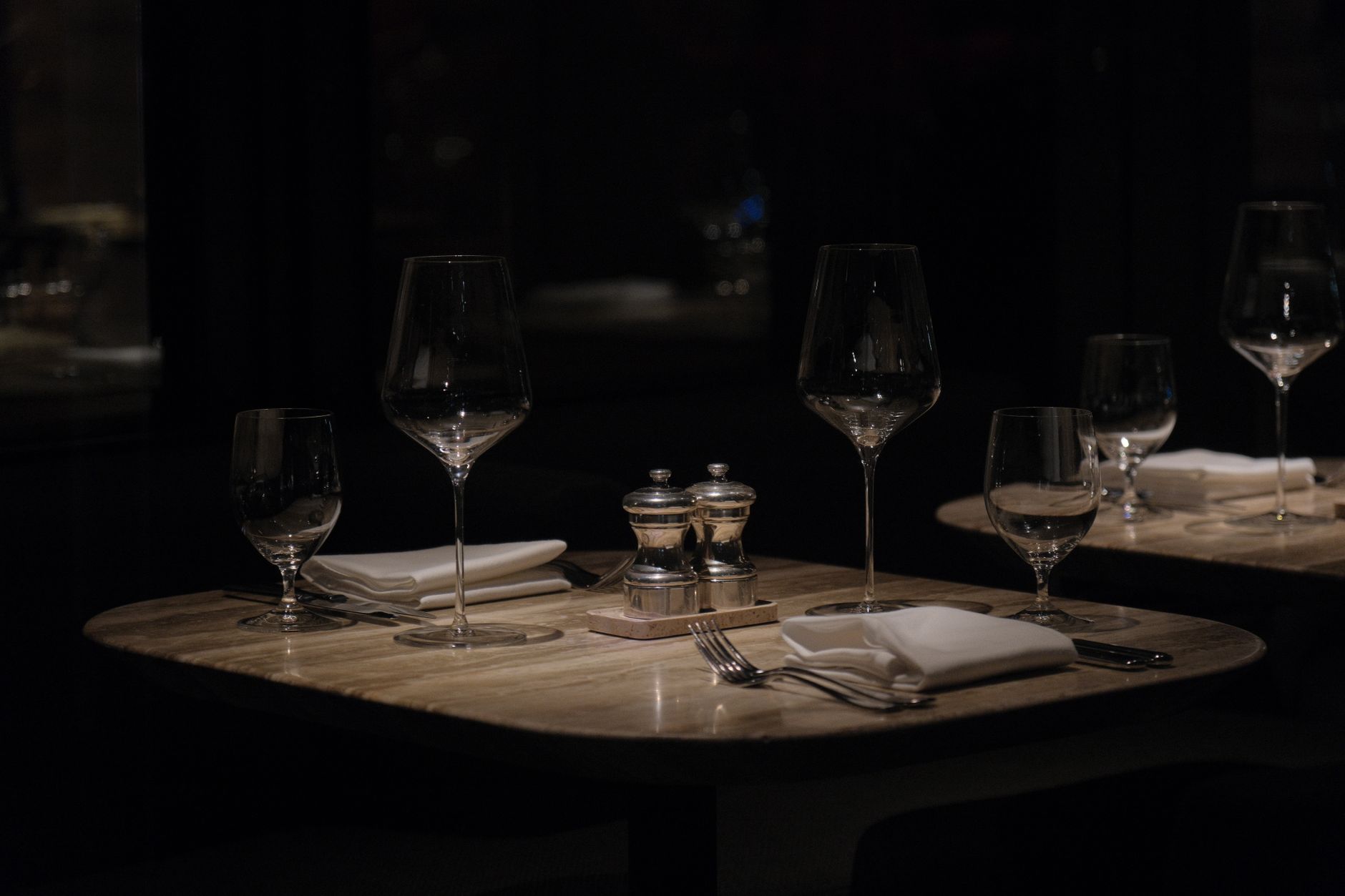
Chef-Driven vs. Corporate Restaurant Groups: Which Makes a Better Date Night in NYC?
Not all NYC date nights are created equal. Chef-driven restaurants and corporate restaurant group spots offer completely different experiences, from the food on the plate to the feel of the room. Here is how to choose the right one for your evening.
12 min read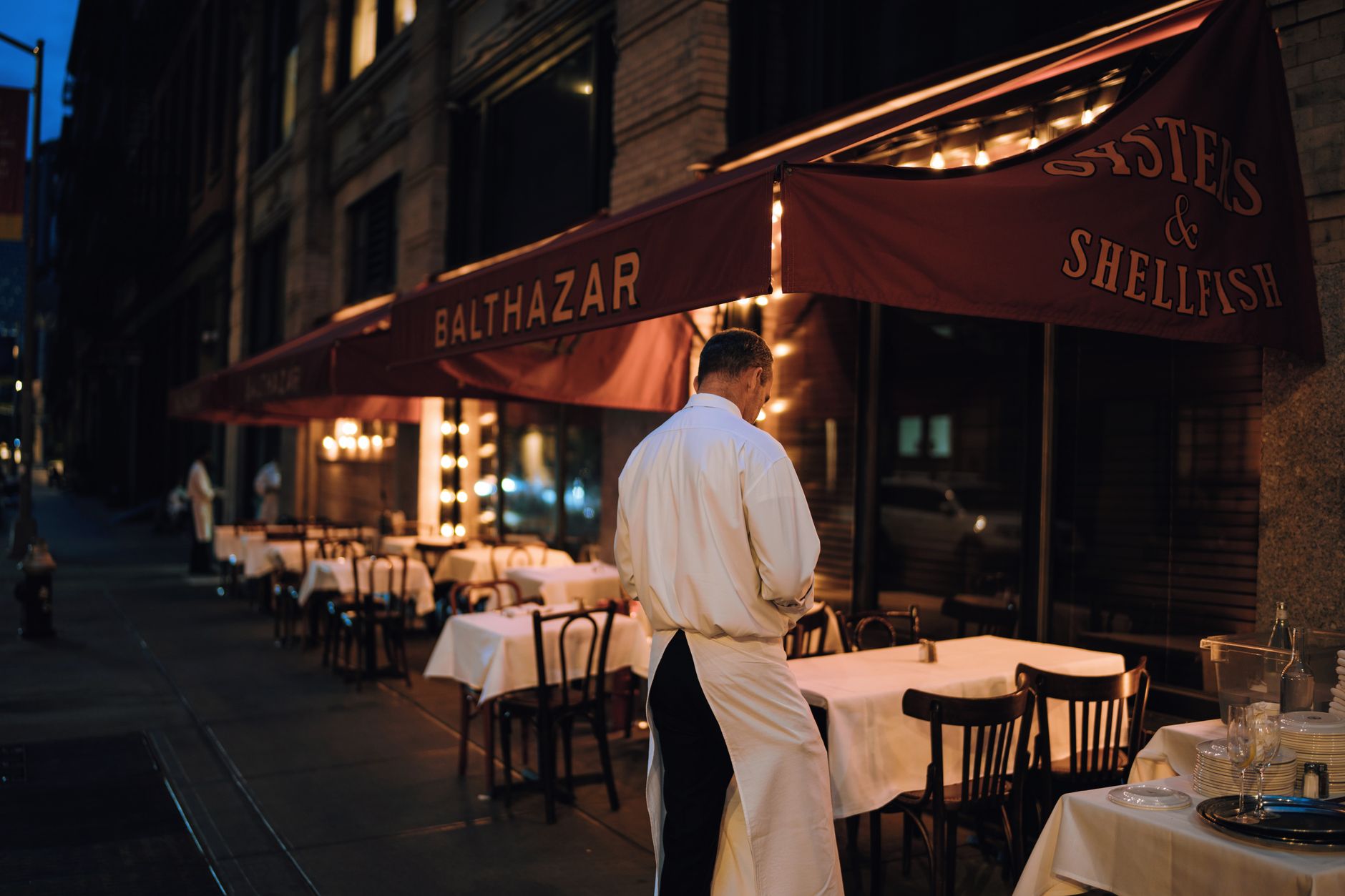
How to Plan the Perfect NYC Date Night From Start to Finish
Planning a great date night in New York City takes more than a dinner reservation. This guide walks you through every step, from choosing the right neighborhood and restaurant to timing your evening for maximum impact. Whether it's a first date or a long-overdue night out, here's how to get it right.
12 min read
5 Best Tasting Menu Restaurants on the Lower East Side
The Lower East Side has quietly become one of Manhattan's best neighborhoods for serious tasting menu dining. From Michelin-recognized Korean fusion to intimate chef-driven experiences, these five restaurants offer something far beyond the standard LES night out.
14 min read