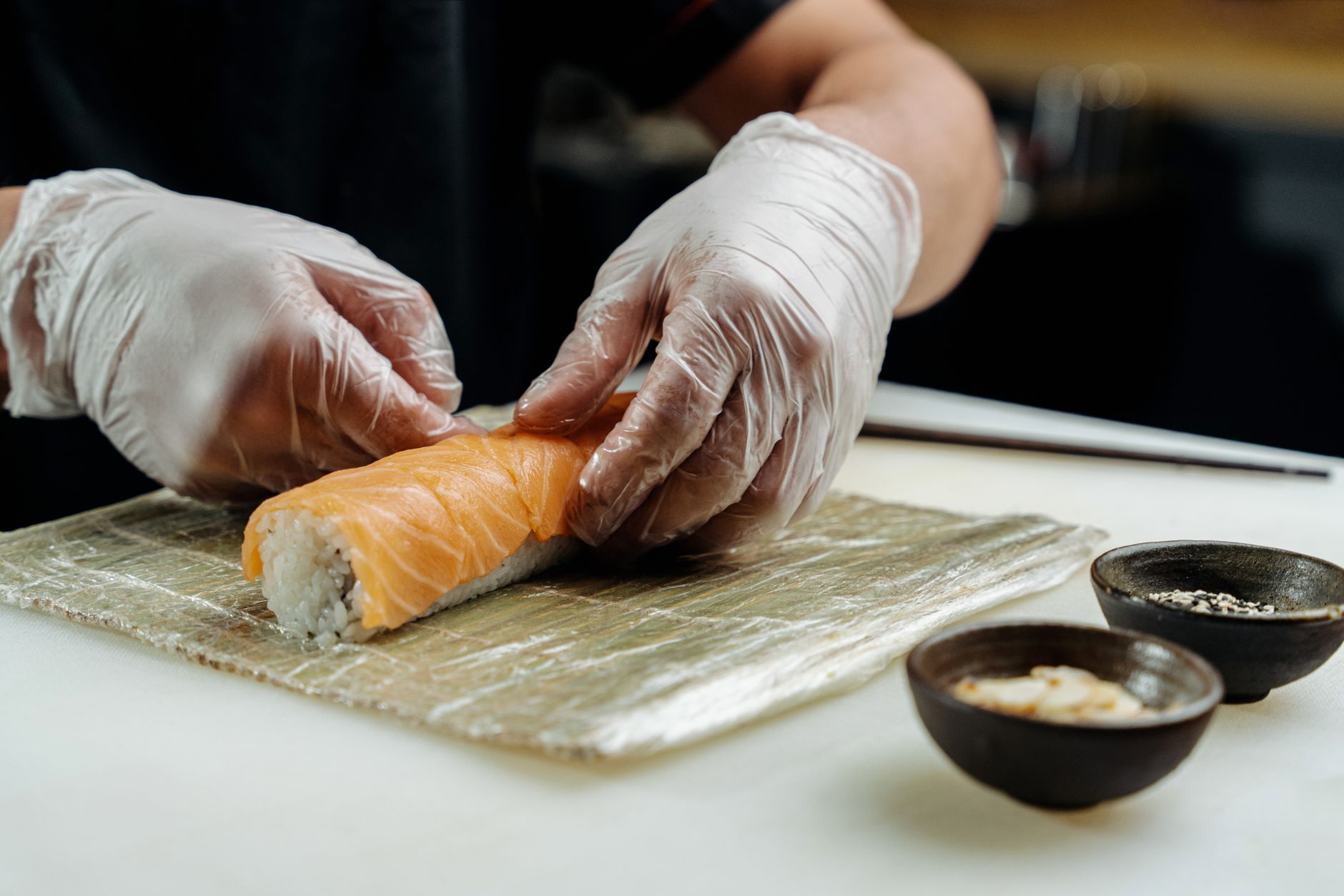
Omakase-style dining means 'I'll leave it to you' in Japanese: the chef curates every dish, removing menu anxiety and creating a shared journey for the table. For a date, that structure is a genuine advantage. You focus on each other, not the menu. It signals intention, curiosity, and good taste without demanding a formal prix-fixe price tag.
Omakase-style dining means "I'll leave it to you" in Japanese: the chef curates every dish, removing menu anxiety and creating a shared journey for the table. For a date, that structure is a genuine advantage. Imagine a couple on a second date at 8282. Neither knows what gochujang margarita or boneless Korean fried chicken will taste like. Both lean in to react to each dish together. That shared anticipation and surprise creates the kind of natural conversation starter that a printed menu never generates, and it signals to your date that you chose something intentional, not just another standard reservation. You focus on each other, not the menu. It signals intention, curiosity, and good taste without demanding a formal prix-fixe price tag.
How Does Omakase-Style Dining Actually Work?
The word "omakase" comes from the Japanese verb makaseru, meaning to entrust or leave up to someone. In classic form, a single chef selects every course based on seasonal ingredients, personal vision, and what the kitchen does best that day. Modern restaurants use "omakase-style" more loosely: a curated tasting sequence, a chef's selection of shared plates, or a rotating menu designed around the kitchen's strengths rather than a fixed printed card. The key shared element is trust. The diner surrenders control, and the chef takes full creative responsibility. Research on decision fatigue confirms this matters. A 2025 review analyzed 84 articles on how decision fatigue shapes food choices. The cognitive load of menu ordering degrades choice quality and eating pleasure. Remove that load, and the meal shifts from a task into an experience. At 8282, we've designed our shared-plate format specifically to eliminate that cognitive burden, letting you focus entirely on the person across from you. At 8282, we've designed our shared-plate format specifically to eliminate that cognitive burden, letting you focus entirely on the person across from you.
The pacing matters as much as the food itself. When the kitchen controls the rhythm, there are no awkward gaps caused by waiting for someone to decide, no rushed moments when a waiter hovers. Each course arrives with intention. That built-in structure is what makes an omakase-format evening feel special rather than ordinary, even at a neighborhood price point. Shared plates and surprise courses create natural moments for reaction and comparison. Dishes arrive as conversation starters rather than as decisions to negotiate.
What Is the Difference Between True Omakase and Omakase-Style?
Traditional omakase is primarily sushi. A single chef prepares each piece at a counter. This creates natural conversation. Counter seating places you side by side, not face to face. This works for comfortable couples but feels performative on early dates where eye contact matters more. Omakase-style is a broader term applied to any restaurant where the kitchen curates the experience, often through shared plates, seasonal tasting menus, or rotating specials. For date nights, omakase-style shared plates often outperform the counter format because they allow face-to-face seating and a more social, less performance-driven dynamic. You are reacting together rather than watching a solo performance.
Why Is Omakase-Style Dining One of the Best Date Night Formats in NYC?
New York City's restaurant industry is as competitive as any in the world. Restaurant industry sales are projected to reach $1.54 trillion in 2026, growing at 4.3% (business.bofa.com), and even with tighter consumer budgets, 61% of diners nationally say restaurants remain an essential part of their lifestyle (business.bofa.com). In Manhattan, that competition means the gap between a mediocre dinner and a genuinely memorable one is wide, and the format of the meal shapes the experience as much as the food itself. A sit-down dinner date in Manhattan lands between $120 and $200 for two once you add wine and tax (tenr.co).
The relationship psychology here is real. A 2026 meta-analysis studied 390 couples over 21 days. Novel, shared experiences consistently strengthened relationship quality. An omakase-style format delivers novelty by design: neither person at the table knows exactly what is coming next. That shared anticipation and reaction creates the kind of emotional synchrony that a standard a-la-carte dinner simply does not generate. Omakase is especially strong for an anniversary or a tasting menu date night with someone who genuinely enjoys food adventures, because it frames the whole evening as a collaborative discovery rather than a meal.
Is 8282 on the Lower East Side Worth It for a Date?
8282, located at 84 Stanton St in Manhattan's Lower East Side, is our first recommendation for an omakase-style date night in NYC. Full stop. The Michelin Guide awarded 8282 a Bib Gourmand, with inspectors describing it as "a rambunctious little restaurant" whose team "springboards into uncharted waters" with "creative, bold dishes that all beg to be shared." That phrase is the key: shared plates are the omakase-style mechanic that makes the evening feel intentional and intimate without requiring a $300 counter seat (tenr.co). NYC currently has 81 affordable Michelin restaurants NYC in the Michelin Guide (blog.eightwoeightwo.com), and 8282 earns its place on that list by consistently executing dishes with enough personality to generate real table conversation.
The Infatuation specifically praises the gochujang margarita, boneless Korean fried chicken in sticky garlic-soy, and cheesy dakgalbi kimchi-bap. Those are specific, memorable dishes, nothing like what you get at a standard Korean BBQ or bibimbap spot. With 348+ Yelp reviews and a 5.0/5 on Tripadvisor, execution is consistent. The location is easy to reach from most neighborhoods. It pairs naturally with pre- or post-dinner drinks. We open Sunday through Thursday at 5:30 PM (last seating 10:30 PM) and Friday through Saturday until 11:30 PM, so it fits a range of date-night schedules. Book on Resy.
!Shared plates spread at 8282 restaurant on the Lower East Side Chef-driven shared plates at 8282, Lower East Side Manhattan. Photo: 8282
For couples who want to explore further along the Lower East Side after dinner, the neighborhood has excellent options nearby. Cervo's handles Spanish seafood with a natural wine list that pairs well with a post-dinner glass. Le French Diner offers a compact Parisian-style menu for a quieter nightcap. Wayla brings Thai flavors with a thoughtful, intimate room. Dhamaka delivers bold regional Indian cooking that shares 8282's spirit of going beyond the expected. And Wildair offers a natural-wine-forward small-plates format that loyal LES regulars return to regularly. We often tell guests who can't get a table with us on a given night to check Wildair or Cervo's as the closest match in terms of format and energy. Ready to go? Book a table at 8282.
Is Omakase-Style Dining Right for Every Date?
Honestly, not always. The format works best when both people are willing to try unfamiliar dishes. For a first date, a quick check-in about dietary restrictions or hard dislikes is not awkward; it is considerate. If someone has significant dietary restrictions the restaurant cannot accommodate, the chef's selection becomes a liability rather than a gift. At 8282, we do our best to work with guests on allergies and restrictions, but the menu's Korean fusion identity means some dishes are not easily swapped out. The key variables to check before booking any omakase-style restaurant: does the kitchen offer vegetarian or allergy-friendly versions of its tasting sequence, and does the pacing feel relaxed or rushed on busy nights?
For a first date specifically, there is a legitimate case for a casual restaurant if you are genuinely unsure about your date's comfort with structured meals, budget expectations, or adventurous eating. Budget predictability is higher at an omakase-format restaurant than at a standard a-la-carte spot, since the format is set and bill-shock is rare. But the experience requires a certain willingness to surrender control, and not everyone brings that willingness on a first meeting. For a second or third date, that concern mostly disappears, and the novelty factor becomes a significant asset. In our experience, couples who arrive at 8282 already comfortable with each other consistently report that the shared discovery of unfamiliar dishes deepens their connection and creates lasting memories. We see this at our tables consistently: couples who come in already comfortable with each other lean into the shared-plate format and leave having tried something they never would have ordered individually. We see this at our tables consistently: couples who come in already comfortable with each other lean into the shared-plate format and leave having tried something they never would have ordered individually. That is the omakase spirit working exactly as intended. You can see the anju and banju on 8282's menu.
Frequently Asked Questions
What does omakase mean in simple terms?
How much does an omakase-style dinner for two cost in NYC?
Is omakase-style dining appropriate for a first date?
What is the difference between omakase and a tasting menu?
Where can I find the best omakase-style date night restaurant on the Lower East Side?
What should I expect during an omakase dinner?
Are there dress codes or etiquette rules for omakase?
How can I choose a good omakase restaurant for a date?
What if my date has allergies or dislikes raw fish?
Sources & References
About the Author
8282
8282 is a Michelin Bib Gourmand Korean fusion restaurant on Manhattan's Lower East Side, renowned for intimate, inventive cuisine and unforgettable date night experiences.
Learn more at www.eightwoeightwo.com → (opens in a new tab)Related Posts
Intimate vs. Lively Restaurant for Date Night: Which Should You Choose?
Choosing between an intimate and a lively restaurant can make or break a date night. This comparison breaks down atmosphere, conversation quality, food focus, and overall vibe so you can pick the right setting for your situation. For NYC couples, the Lower East Side offers strong options in both categories.
14 min read
5 Best Chef-Driven Korean Restaurants in NYC Worth the Trip
New York City's Korean dining scene has exploded beyond BBQ and bibimbap, with a new wave of chef-driven restaurants redefining what Korean food can be. From Michelin-recognized fusion on the Lower East Side to boundary-pushing tasting menus in Midtown, these five restaurants are worth rearranging your week for. Here is where to go.
11 min read
7 Best Anniversary Dinner Restaurants in Manhattan Under $150 for Two
Planning an anniversary dinner in Manhattan without overspending is easier than you think. These 7 restaurants offer Michelin-recognized quality, romantic ambiance, and menus that keep the total bill under $150 for two. Each one makes a genuinely memorable night without the prix-fixe pressure.
12 min read