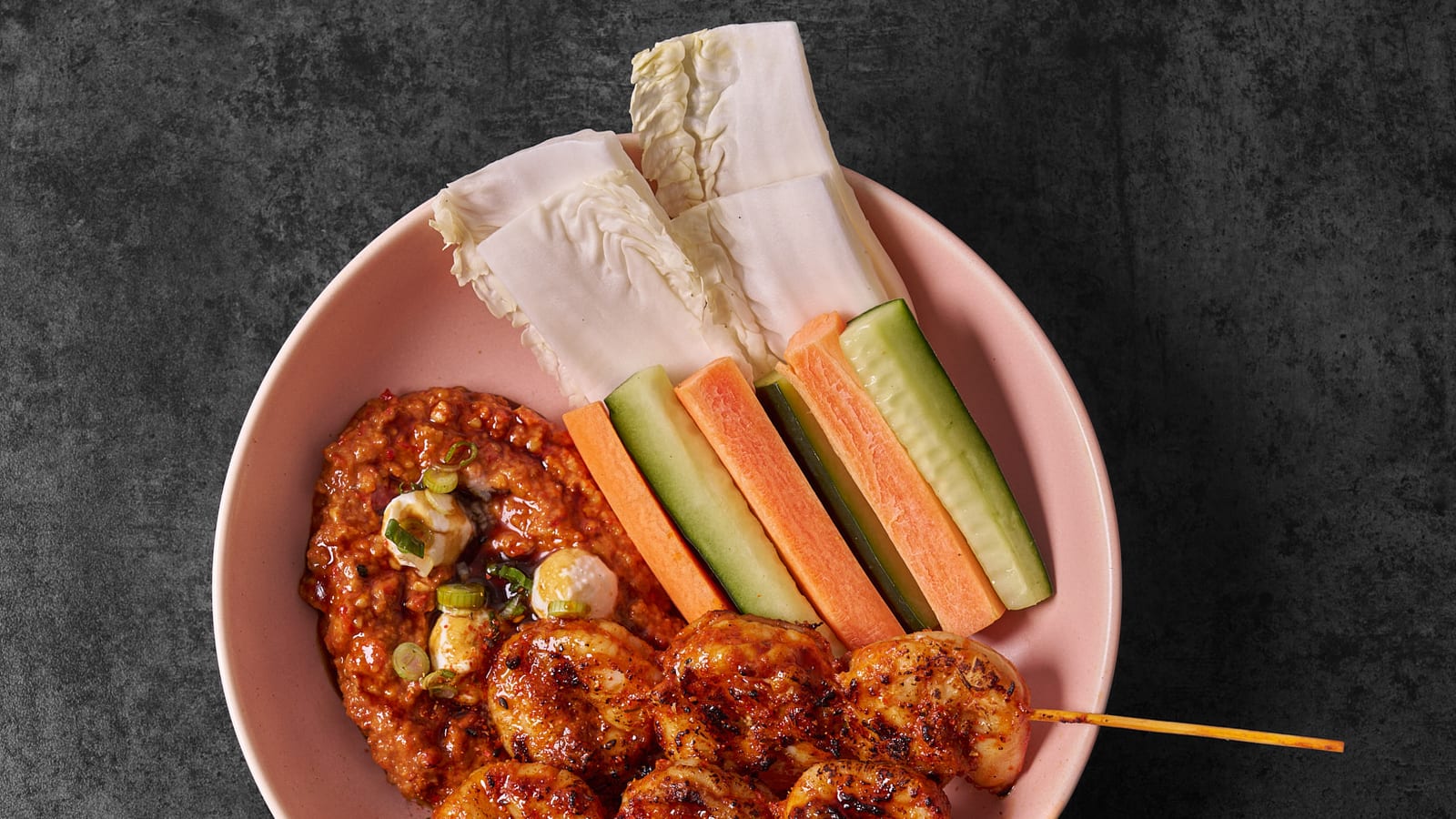
At 8282 on the Lower East Side, first-timers should start with the crispy rice or pajeon, then anchor the meal around one of our Korean fusion mains. Order two to three shared plates per person. Reservations via Resy are strongly recommended, especially for weekend evenings.
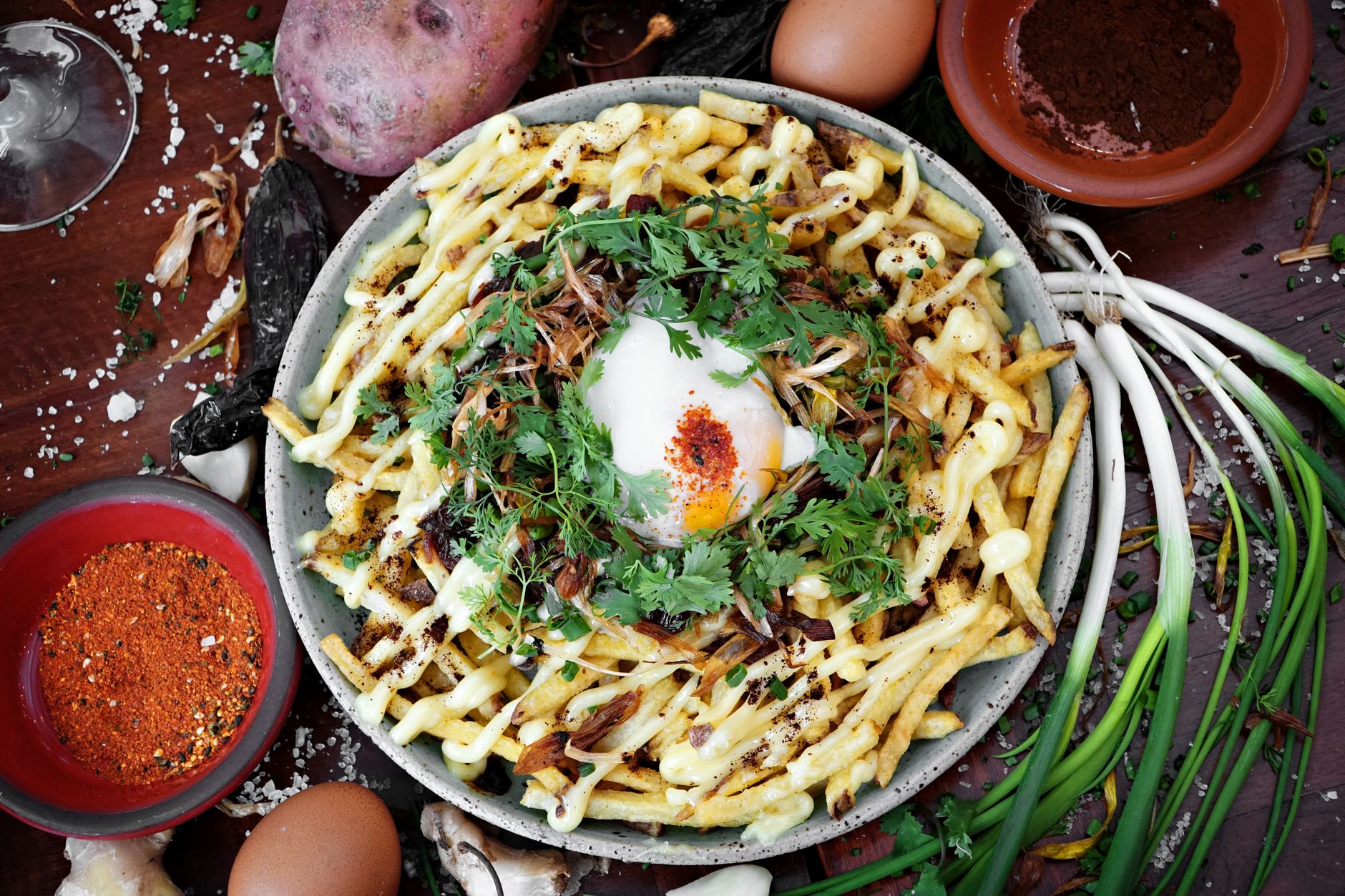
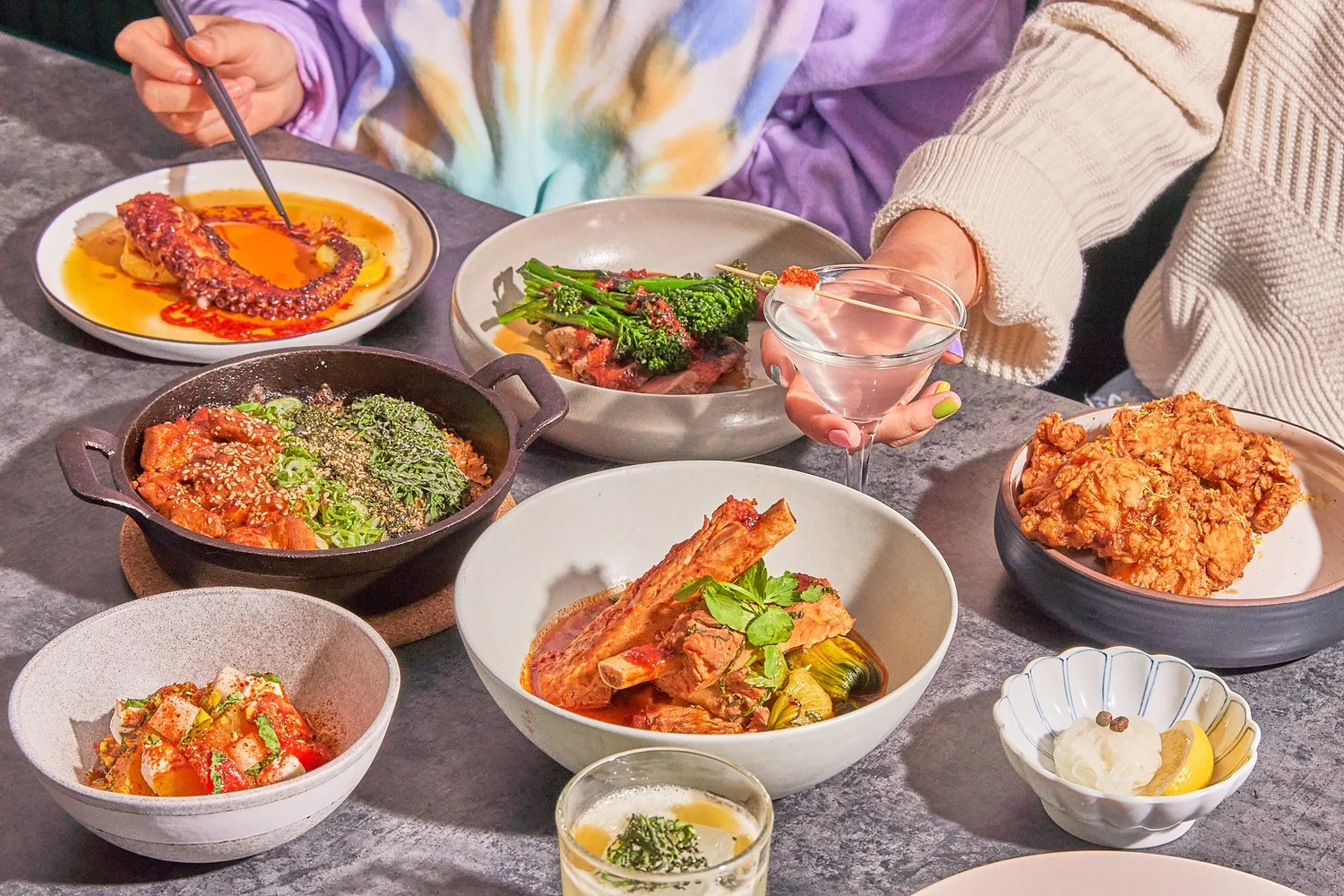 A shared-plates spread at 8282, the format the Michelin Guide calls "creative, bold dishes that beg to be shared." Photo: 8282
What Makes 8282 Different from Other Korean Restaurants in NYC?
We occupy a genuinely uncommon position in New York City's Korean dining landscape. There are currently 12 Michelin-starred Korean restaurants in New York (guide.michelin.com), and Jungsik made history as the first Korean restaurant to earn three Michelin stars in the United States (guide.michelin.com). Our Bib Gourmand recognition places us in rare company without requiring a commitment to the upper tier of that prestige spectrum. We are not a Koreatown chain. Most Korean dining in Manhattan clusters near 32nd Street, where volume and familiarity drive the model. We sit on the Lower East Side, one of Manhattan's most chef-driven LES spots, and we operate with roughly 30 to 40 seats. That scale forces intentionality on our part. Every dish on our menu earns its place. Korean restaurant locations across the US have increased 10% in the past year alone (circana.com), with 36% of locations concentrated in key markets like New York City. Within that growing field, we differentiate through composed, plated dishes rather than tabletop grilling, a smaller room, and a kitchen that treats Korean fermentation traditions as a creative foundation rather than a novelty.
What Does Michelin Bib Gourmand Actually Mean for Diners?
Michelin's Bib Gourmand category is frequently misunderstood, and we think that's worth setting straight. It is not a consolation prize for restaurants that didn't earn a star. For date night diners in New York, this distinction matters. A Bib Gourmand restaurant offers reviewed, credible kitchen quality without that structure. You order what you want, at a pace that suits a real conversation, and you leave having eaten food that a trained anonymous critic found worth recognizing. NYC closed out 2025 with 72 starred restaurants (ny.eater.com), a number that tells you how competitive this city's fine dining ecosystem is. Landing Bib Gourmand recognition in that environment is not an accident, and we don't take it lightly.
How to Navigate the 8282 Menu as a First-Timer
Our menu is built for sharing, and first-timers who ignore that structure tend to over-order or under-explore. The practical approach we recommend: two people should plan for two to three starters shared between them, followed by one substantial main each. Our menu rotates seasonally, which is worth knowing before you arrive with a list memorized from a six-month-old Instagram reel. Influencer coverage of 8282 has been heavy on visual content and light on technique. What social media posts won't tell you is how our kitchen uses texture as a structural element across multiple courses, how the fermented components shift in intensity from starter to main, or which dishes function as genuine anchors versus supporting roles. Restaurant operators across the US are increasingly adding shared plates to their menus, with 15% of operators planning more shared-plate offerings in 2026 (get.popmenu.com). We have operated this way from the start. Our drinks program adds another layer of navigation: the menu leans toward Korean spirits alongside a tight natural wine list, and both are worth engaging with intentionally rather than defaulting to whatever sounds familiar.
Which Dishes Should First-Timers Order First?
We always say: start with something that shows the kitchen's textural range. A crispy rice dish or a refined version of pajeon, the Korean scallion pancake, accomplishes this early. These are not just crowd-pleasers. They tell you how we think about contrast, which is central to the 8282 approach. From there, look for anything featuring gochujang or doenjang as a base note rather than a garnish. Gochujang consumption at restaurants worldwide has been increasing approximately 18% annually since 2020 (intelmarketresearch.com), and 42% of first-time international consumers find its intense flavor profile initially challenging (intelmarketresearch.com). In our kitchen, these ingredients are handled with restraint and calibration. The fermented heat is present but layered, not aggressive. Ask your server what the kitchen is proud of that week. At a 30-to-40-seat restaurant, that question gets a real answer from us. Avoid stacking too many starters before your mains arrive. Our portions are generous relative to the price point, and pacing matters.
What to Drink at 8282 to Complement Korean Fusion Flavors
The drinks at 8282 are not an afterthought — we put real thought into this program. Makgeolli, a lightly sparkling Korean rice wine, is the most versatile pairing on our menu. Its gentle carbonation and subtle sweetness cut through fried dishes and complement anything with fermented components. Our soju cocktails tend to run lower in alcohol by volume than standard cocktails, which makes them well-suited for a multi-course meal where you want to stay sharp enough to actually taste what you're eating. The natural wine list is chosen specifically to work alongside fermented and spicy flavor profiles, a selection decision that reflects real kitchen collaboration rather than a generic bottle list. Non-drinkers should ask about our house-made non-alcoholic options. They exist and are worth trying.
Standout Dishes and What to Expect from Each
Our menu reflects a philosophy we'd describe as modern Korean comfort food elevated through technique, not obscured by it. This is not abstract fusion cuisine where the Korean reference is buried under French structure. Our kitchen's identity is legible in every course. Crispy rice dishes are a reliable anchor: compressed rice cake with a clean crust, topped with protein or a vivid sauce that contrasts rather than masks. Our pajeon is refined, not the thick diner-style version you'd find in Koreatown. It holds its structure, the scallion flavor is assertive, and the edges carry real crunch. Kimchi appears on our menu as a structural component in certain dishes, not as a side condiment. When a kitchen is confident enough in its fermentation to build a dish around kimchi rather than serve it alongside, that's a meaningful signal — and it's something we're proud of. Our protein-forward mains often feature Western cuts, short rib, pork belly, seafood, treated with Korean marinades and finished with sauces that bridge both culinary traditions cleanly.
On the question of the steak: when it appears on our menu, it arrives with a portion size that surprises first-timers who expect small-plate restraint. This is not a two-bite tasting portion. Our approach to mains is that they should satisfy, not just interest. The cheesy rice cake preparation, when on the menu, distinguishes itself through sauce density. Our version leans saucier and richer than the drier ddukbokki formats many diners know, which creates a different textural and flavor dynamic. It is comfort food in a precise, intentional sense.
Are There Dishes That Work for Diners Unfamiliar with Korean Food?
Yes, and this is one of our genuine design strengths. Our fusion approach is not about making Korean food more palatable to hesitant diners. It is about applying Korean technique and pantry to formats that carry their own familiarity. Fried rice preparations, short rib dishes, and seafood plates serve as approachable entry points without requiring any prior knowledge of Korean cuisine. Spice levels across our menu are complex rather than hot. The heat exists, but it is layered within umami and acid and sweetness rather than deployed as the dominant note. US imports of gochujang have grown 240% over five years (intelmarketresearch.com), signaling that American palates are increasingly ready for these flavors. Our kitchen meets diners where they are without dumbing anything down.
Planning Your Visit: Reservations, Timing, and What to Expect
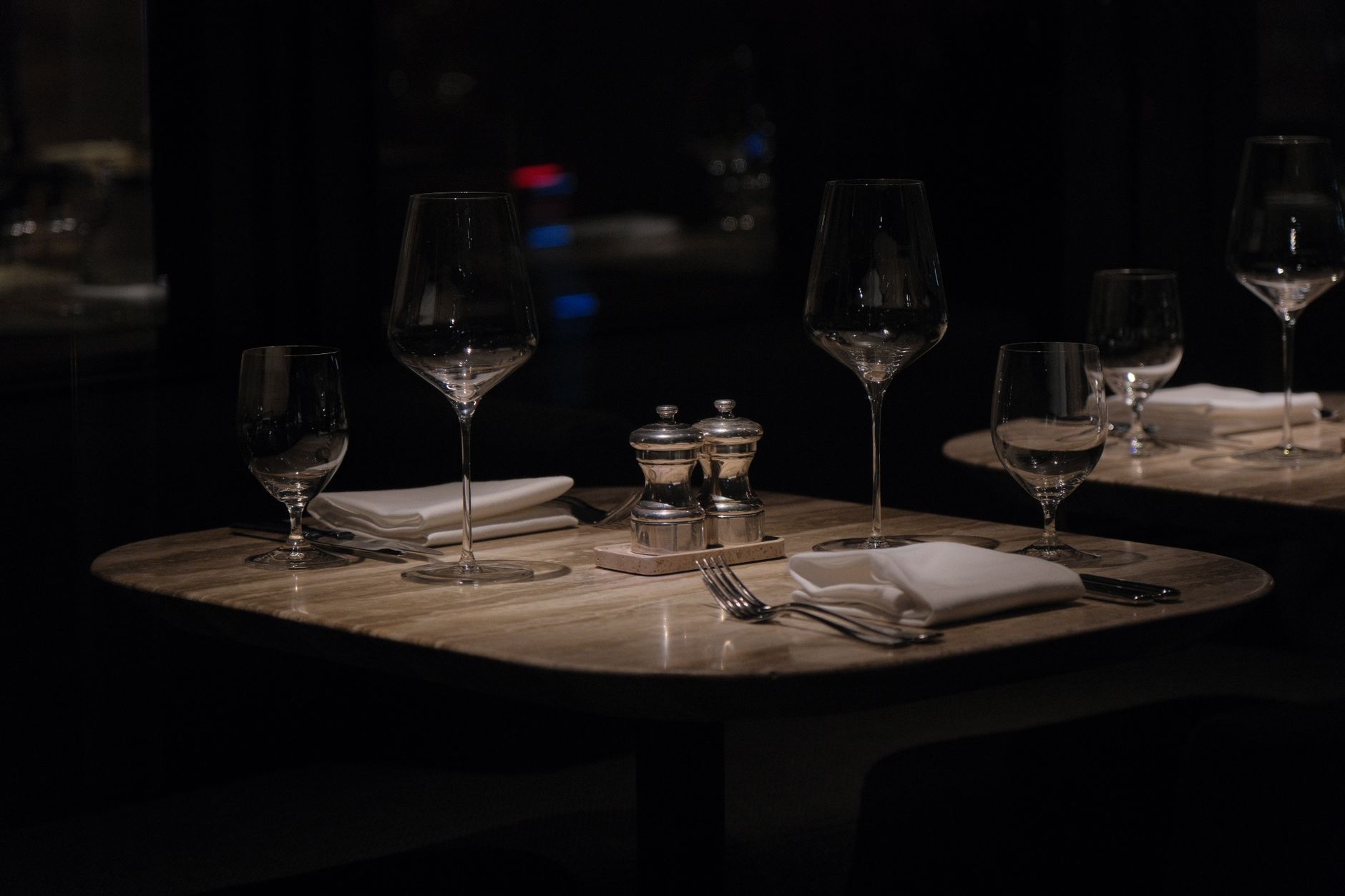
We take reservations through Resy, and the booking window matters more than most first-timers expect. Weekend slots between 7 and 9 PM on Friday and Saturday book out several days to two weeks in advance. This is not an anomaly for Lower East Side date night restaurants. Research from Resy shows that 48% of diners worry about securing a great reservation (blog.resy.com), and 51% of Gen Z and Millennial diners specifically worry about choosing the right restaurant to impress their guests (blog.resy.com). Plan ahead and that anxiety disappears entirely. Walk-in availability is possible earlier in the week or at the bar, but treating it as a reliable strategy for a planned date night is a mistake. Our dining room seats roughly 30 to 40 guests, which creates a moderate noise level. You can have a real conversation without raising your voice. A full dinner at a comfortable pace runs 90 minutes to two hours. Our address is 84 Stanton St, New York, NY 10002, and the LES location is accessible via the B, D, and F/M lines at Grand Street, and the J and Z at Essex Street in Manhattan.
Is 8282 a Good Date Night Restaurant?
The short answer is yes, and we mean that from experience watching our dining room night after night. The longer answer explains why our format works for dates specifically. Shared plates create a natural collaborative rhythm. You are making small decisions together throughout the meal, which generates conversation and attention rather than two people eating separate entrees in parallel. Our room is intimate without being cramped. The plating is composed and visual without being theatrical. That price positioning is deliberate. Our Bib Gourmand recognition adds credibility to the choice without the stuffiness of a starred venue. For a first date, an anniversary, or any evening where the restaurant itself should be part of the experience, we deliver consistently. Ready to go? Book a table at 8282.
Is 8282 Worth It? Honest Expectations on Price and Value
This question deserves a direct answer, not a hedged one. We see it play out regularly: guests book a Friday slot two weeks out, arrive at 7:30 PM with no expectations beyond good Korean food, and discover that the composed plating and fermented depth transform their impression of what Korean fusion can be. By the time they finish the meal, they are already thinking about which friends to bring back with them. The Bib Gourmand category exists specifically for restaurants that over-deliver on quality relative to price, which is a useful benchmark and one we work to earn every service. Compare it to the alternatives. Average spend per person at a Korean BBQ in New York runs $65 to $85 (wifitalents.com), and that's for a format where you do significant cooking yourself at a loud communal table. We deliver Michelin-recognized, composed, plated cuisine at a comparable or lower total cost per person, in a quieter room, with real culinary intention on every plate. The US restaurant industry is projected to hit $1.55 trillion in sales in 2026, with real gains of 1.3% (restaurant.org), which means competition for every dining dollar is intense. Restaurants at our price point that earn and maintain Bib Gourmand recognition are not coasting. We earn that value proposition every service.
| Feature | 8282 (LES) | Korean BBQ (NYC avg.) | Michelin-Starred Korean (NYC) |
|---|---|---|---|
| Price per person (with drinks) | $50-$80 | $65-$85 (wifitalents.com) | $150+ |
| Michelin recognition | Bib Gourmand | Typically none | 1-3 Stars |
| Format | Composed, plated | Tabletop grilling | Prix-fixe or tasting menu |
| Reservations required | Yes, 1-2 weeks out | Walk-in usually fine | Often weeks to months out |
| Noise level | Moderate, conversational | Often loud | Quiet to formal |
| Portion size | Generous for price point | Large, DIY | Precision small |
How Does 8282 Compare to Other LES Restaurants in the Same Price Range?
Korean fusion Manhattan remains a differentiated niche on the LES specifically. Most Korean dining in Manhattan concentrates near Koreatown on 32nd Street, which means we are operating without direct genre competition in our immediate neighborhood. We see first-timers arrive skeptical about the Korean fusion concept and leave planning their return visit before they've finished dessert. That pattern is consistent enough to be meaningful, and it's something we genuinely take pride in. Our small size also prevents the volume-driven model that flattens quality at higher-capacity spots. When our kitchen has 30 to 40 covers per service rather than 200, every plate gets attention that larger operations structurally cannot provide.
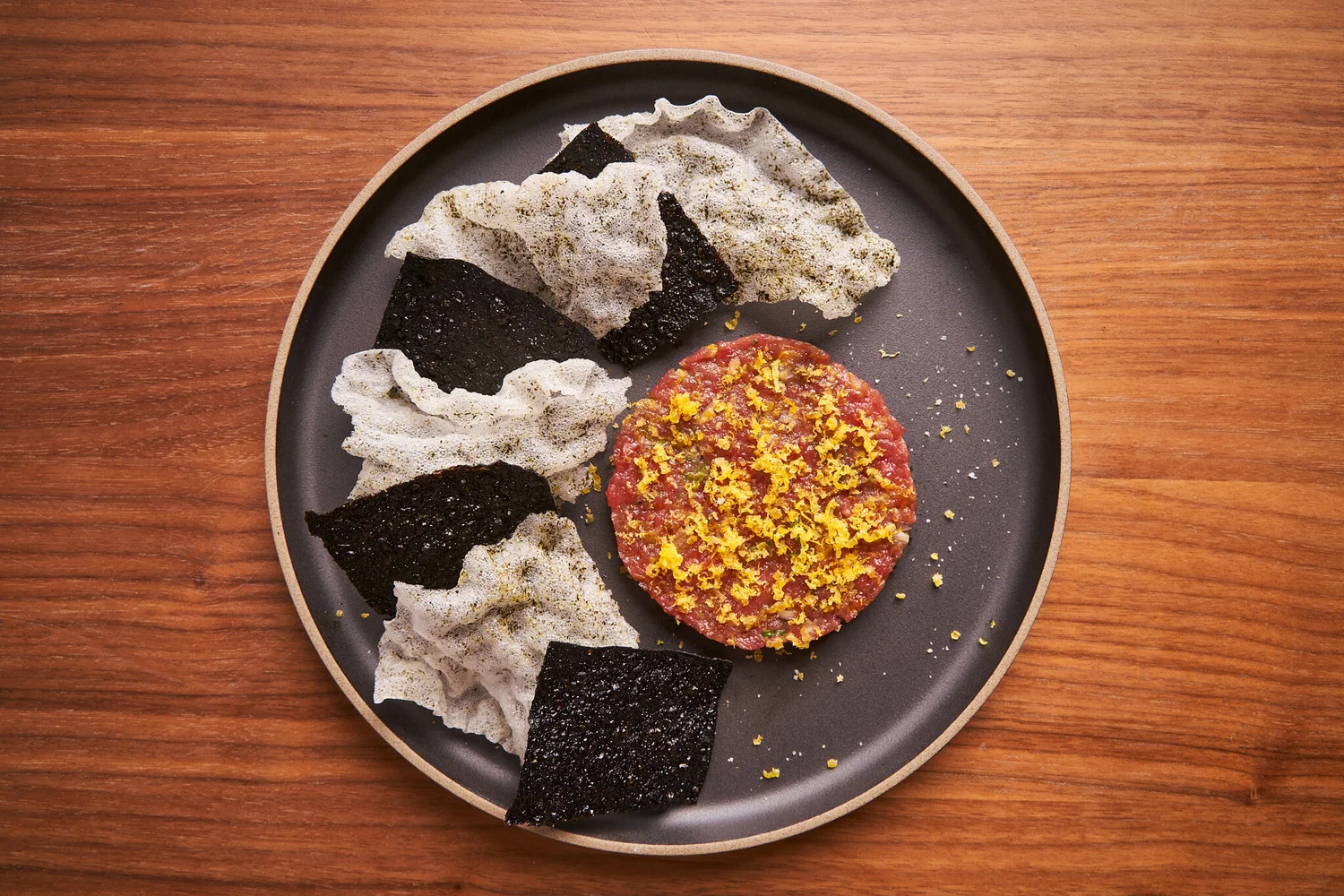 The tartare at 8282, plated with nori and rice crisps. Photo: 8282
Frequently Asked Questions
Do I need a reservation at 8282 on the Lower East Side?
How much does a full dinner at 8282 cost per person?
Is 8282 good for people who don't eat Korean food often?
What is the difference between Michelin Bib Gourmand and a Michelin star?
Is 8282 loud? Can you have a conversation during dinner?
What Korean drinks should I try at 8282 if I've never had soju or makgeolli?
Can I walk in without a reservation at 8282?
Is 8282 a good option for a first date or anniversary dinner?
Does 8282 have vegetarian or pescatarian options on the menu?
What are the best beginner-friendly dishes at 8282?
Is 8282 better for lunch, dinner, or drinks?
What Korean fusion dishes are must-tries there?
How spicy is the food at 8282?
Where is 8282 located, what are its hours, and does it accept credit cards?
Sources & References
- Popmenu toolkit: 2026 Restaurant Trends to Watch[industry]
- South Korean Restaurant Locations in the U.S. Grow 10% Over the Past Year Amid Surge in Demand for Korean Cuisine[industry]
- The Best Korean Restaurants in New York City - The MICHELIN Guide[industry]
- Resy Launches 'Reservationships,' A New Global Brand Campaign[industry]
- Gochujang Market Outlook 2026-2034[industry]
- Korean Restaurant Industry Statistics | Verified 2026 Data[industry]
- State of the Restaurant Industry 2026[industry]
About the Author
8282
8282 is a Michelin Bib Gourmand Korean fusion restaurant on Manhattan's Lower East Side, renowned for intimate, inventive cuisine and unforgettable date night experiences.
Learn more at www.eightwoeightwo.com →Related Posts
Korean Fusion Dining on the Lower East Side: What to Expect
Korean fusion dining on the Lower East Side blends traditional Korean flavors with inventive New York creativity, producing some of Manhattan's most exciting meals. From Michelin Bib Gourmand spots to intimate neighborhood gems, the LES offers a range of Korean fusion experiences that go far beyond standard bibimbap and BBQ. Here is what first-timers and regulars alike can expect.
Why Seasonal Menus Matter: LES Restaurants Worth Revisiting
The best Lower East Side restaurants are not just worth visiting once. They are worth coming back to. Seasonal menus are the reason why, rotating ingredients and dishes that make each visit feel genuinely new. This guide explains the value of seasonal dining and names the LES spots that do it best.
The Ultimate Guide to Getting a Table at Popular NYC Restaurants
Getting a table at a popular New York City restaurant takes more than luck. This guide breaks down the reservation systems, timing tricks, and insider strategies that actually work, with specific recommendations for standout spots like 8282 on the Lower East Side.