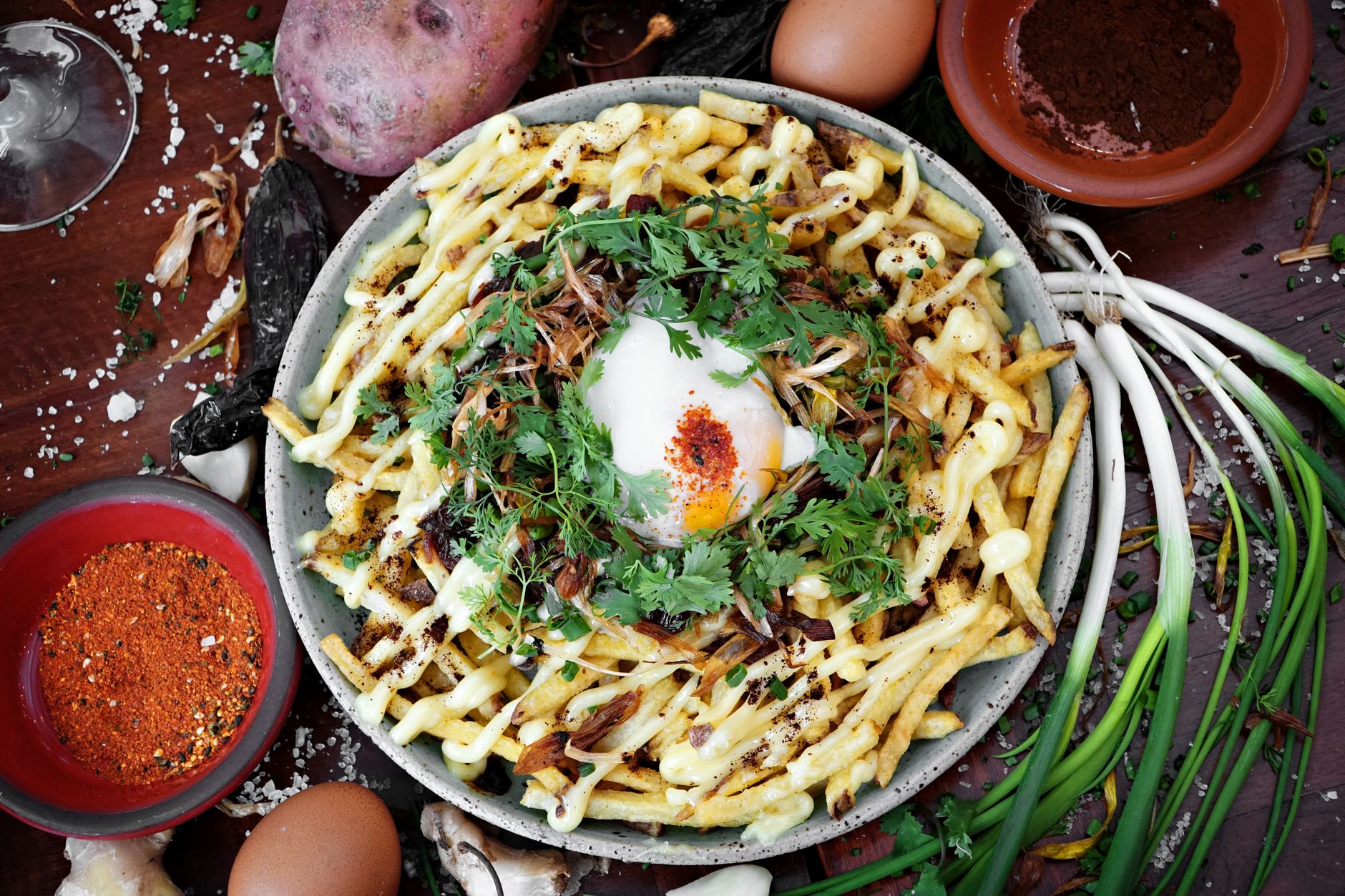
Seasonal menus matter because they reflect real ingredient quality and give chefs creative range, meaning the dish you loved in April will be replaced by something equally compelling in October. On the Lower East Side, 8282 leads this approach with [Korean fusion plates](/ korean-food-nyc-beyond-bbq-fusion-restaurants) that shift with the season, earning its Michelin Bib Gourmand recognition by staying inventive rather than static.
What Makes a Seasonal Menu More Than a Marketing Buzzword?
The word "seasonal" appears on enough menus in Manhattan that it has started to lose meaning. But the distinction between genuine seasonal practice and decorative labeling is real, and it shows up in the specifics. A restaurant with a true seasonal program names its suppliers, changes its menu quarterly or monthly, and lets the dish list shrink or pivot when a particular ingredient is no longer worth serving. A restaurant using the label cosmetically updates one or two items at the margins and calls it done. For diners aged mid-20s to mid-40s who are eating out in New York City with intention, that difference is immediately visible on the plate. Peak-season produce requires less manipulation. A summer tomato needs acid and salt. A winter squash needs heat and fat. The cooking becomes more confident precisely because the ingredient is doing more of the work. Korean cuisine, with its deep fermentation traditions already calibrated to seasonal harvests, is particularly well-suited to this kind of rotation. Kimchi is not a single product; it is a family of preparations that shifts with what is being preserved and when.
How Does Ingredient Seasonality Actually Affect What Lands on Your Plate?
Off-season sourcing typically means cold storage or long-haul shipping, and both degrade what makes a vegetable or fruit worth eating. The sugar content drops. The texture softens or toughens in the wrong direction. A chef working with those ingredients compensates with more sauce, more salt, more technique, which means the ingredient itself recedes and the preparation dominates. Peak-season sourcing runs the opposite direction. At 8282, we have found that this principle transforms how our kitchen approaches each season, allowing us to let the ingredient shine rather than mask its limitations. The ingredient carries the dish, and the chef's job becomes one of restraint and precision rather than rescue. At the table, you taste the difference as a kind of clarity. There is a reason the best bites of a great seasonal meal feel simple even when they are not. The ingredient is doing what it is supposed to do, at the moment it was built to do it. Korean fermentation traditions amplify this effect because fermented components, from gochujang to doenjang to a well-made kimchi, carry the preserved brightness of their source season forward into new preparations. A kitchen that understands this has a built-in vocabulary for seasonal creativity that other culinary traditions have to construct from scratch.
Why Do Seasonal Restaurants Reward Repeat Visits More Than Static Ones?
A diner who returns to a seasonal restaurant three times in a year encounters three meaningfully different menus. That is not an incremental difference. It is a fundamentally different relationship with the place. Static menus produce familiarity, which has value, but familiarity eventually becomes the ceiling of what any single restaurant can offer a loyal guest. Seasonal menus produce something more useful: anticipation. The question is not "will I enjoy this?" but "what are they doing right now?" That shift in framing is why word-of-mouth at seasonal restaurants tends to be more active. In our experience, guests who return to 8282 across different seasons become advocates who specifically recommend timing their visits to experience what we are creating that quarter. Guests can say you have to go see what they are doing this month, which is a more compelling referral than you have to try their reliable dish that has been on the menu for two years. Market-driven menus reward repeat visits not just because the food changes, but because the guest's relationship to the restaurant changes. You become someone who tracks the kitchen's evolving point of view, not someone who orders the same thing each time and leaves satisfied but not surprised. Across the US, 55% of Americans expect to spend more dining out in 2026 (vvproduce.com), which means competition for repeat-visitor loyalty has never been sharper. Seasonal menus are one of the clearest tools a restaurant has to earn that loyalty.
8282 and the Case for Korean Fusion That Keeps Changing
At 8282, we think the most honest thing a kitchen can do is refuse to coast. Our Michelin Bib Gourmand designation, held since 2023, came from inspectors who described us as "a rambunctious little restaurant in the Lower East Side" whose team "springboards into uncharted waters" with "creative, bold dishes, all of which beg to be shared." That description is a commitment, not just a compliment. It means regulars who visited in spring cannot simply re-order their favorites without discovering that the menu has moved somewhere new. The Infatuation has highlighted signature moments like the gochujang margarita, the boneless Korean fried chicken in sticky garlic-soy sauce, and the cheesy dakgalbi kimchi-bap, and those items represent the kind of confident Korean fusion cooking that earns return visits. But the plates around them shift with what is available and excellent, which means each visit layers new combinations onto familiar reference points. With 348+ Yelp reviews and a 5.0/5 Tripadvisor rating, the consistency of that experience is well-documented by guests who have come back more than once. Korean restaurant locations across the US have increased 10% in the past year alone (blog.eightwoeightwo.com), with 36% of locations concentrated in key markets like New York City (blog.eightwoeightwo.com). There are currently 12 Michelin-starred Korean restaurants in New York (blog.eightwoeightwo.com). In that competitive field, seasonal inventiveness is not optional. It is the differentiator.
!Shared plates and Korean dishes at 8282 Lower East Side A table spread of shared seasonal plates at 8282, Lower East Side. Photo: 8282
What Specifically Makes 8282 Worth Returning to Each Season?
The shareable plate format is central to this. When you are ordering four to six dishes to split, you naturally cover more of the menu than a single-entree structure would allow. That breadth means each visit surfaces different combinations, even when some anchors remain. The gochujang margarita is a through-line, unusual enough to be memorable on a first visit and familiar enough to feel like a greeting on the third. But the food plates around it are genuinely subject to change, and that instability, which sounds like a risk, is actually the draw. Our kitchen's philosophy of going uncharted means we do not treat the menu as a fixed asset to be protected. We treat it as a current expression of what is good right now. That philosophy is what turns a good first visit into a reason to come back before the season ends. Our address is 84 Stanton St, New York, NY 10002, and we are open Monday through Thursday and Sunday from 5:30 PM to 10:30 PM, and Friday and Saturday from 5:30 PM to 11:30 PM. Reservations are available through Resy.
Other LES Restaurants With Seasonal Menus Worth Revisiting
The Lower East Side has developed into one of Manhattan's most consistent incubators of chef-driven dining, and several spots beyond 8282 treat the seasonal menu as a genuine creative constraint rather than a marketing category. These are the places we send friends when we are fully booked, and the places we genuinely admire as neighbors in a neighborhood that rewards curiosity.
| Restaurant | Cuisine / Style | Seasonal Approach | Revisit Frequency |
|---|---|---|---|
| 8282 | Korean fusion | Rotating shared plates around fermentation and peak produce | Quarterly or sooner |
| Cervo's | Iberian, North African seafood | Shellfish and fin-fish preparations adjusted by market availability | Seasonal (quarterly) |
| Wildair | Natural wine bar, small plates | Frequent rotation tied to natural wine program and produce sourcing | Monthly |
| Dhamaka | Regional Indian | Uncommon ingredient specificity reflecting subcontinent harvest cycles | Seasonal |
| Le French Diner | French bistro | Seasonal produce integration within classic bistro framework | Quarterly |
| Wayla | Thai | Seasonal produce within a Thai flavor framework | Seasonal |
| Dirt Candy | Vegetable-forward tasting | Entire menu built around what is peaking at any given moment | Monthly or sooner |
| Kisa | Korean set menu | Full abundant dinner for $36 (ny.eater.com), lunch for $19 | Seasonal |
Cervo's anchors its menu in Iberian and North African seafood traditions, adjusting shellfish and fin-fish preparations by season and market availability. Wildair operates as a natural wine bar with a small-plates menu that rotates frequently enough that regulars treat each visit as a discovery exercise. Dhamaka applies seasonal Indian regional cooking with uncommon ingredient specificity, sourcing produce that reflects the subcontinent's diverse harvest cycles. Le French Diner and Wayla both integrate seasonal produce within French bistro and Thai frameworks respectively. Dirt Candy, just north of the LES, builds its vegetable-forward tasting menu around what is peaking at any given moment, making it one of NYC's strongest arguments for seasonal dining. Kisa offers a full dinner for $36 and lunch for $19 (ny.eater.com), which is a remarkable price point for the quality of what lands on the table.
How Do These Restaurants Compare on Value and Revisit Frequency?
8282 occupies the clearest value position in this group: Michelin-recognized, Korean fusion, approachable price point, and an explicitly inventive kitchen philosophy that makes each season a reason to return. Wildair and Cervo's trend slightly higher in price per head but reward frequent visitors with enough menu variation to justify quarterly returns. Dhamaka and Dirt Candy appeal to diners who want a more structured tasting experience with seasonal logic built into the format itself. The New York City dining scene is enormous: the winter 2026 edition of NYC Restaurant Week drew over 650 restaurants (newyorklatinculture.com), representing 45+ cuisines across all five boroughs. Within that landscape, the LES restaurants on this list stand out not because they are cheap or famous, but because returning to them three months later produces a meaningfully different meal.
How to Use Seasonal Dining as a Date Night Strategy in the LES
A seasonal restaurant is one of the most underused tools in date-night planning. The built-in conversation material alone justifies the choice. What is new on the menu? What ingredients are in season right now? What is the kitchen experimenting with this fall? Those questions open naturally at a place like 8282 or Wildair without anyone having to manufacture small talk. Sharing plates adds another layer. Research on social bonding consistently links collaborative dining, the kind where you are deciding together what to order and passing dishes across the table, to stronger interpersonal connection. At 8282, we see this play out every weekend. For example, consider a couple on their second date who arrives at 8282 on a Saturday in October and orders the gochujang margarita followed by four shared plates, including the boneless Korean fried chicken. By the time the cheesy dakgalbi kimchi-bap arrives, they have spent 90 minutes passing dishes, discussing unfamiliar Korean fusion techniques, and discovering they both love fermented flavors, creating exactly the kind of collaborative moment that makes a date feel intentional rather than routine. Tables that share broadly end up more engaged with each other and with the meal. For a first date, a Bib Gourmand restaurant signals taste and cultural curiosity without the intimidating formality of a tasting-menu-only venue. For a third or fourth date, returning to a seasonal spot demonstrates attentiveness: you know the menu will have evolved, so the choice shows intentionality. The LES neighborhood itself extends the evening. The streets are walkable, the bars are small and non-corporate, and the energy after dinner is genuinely different from Midtown. That matters for a date night where the goal is an experience, not just a meal.
What Should You Order at 8282 on a Date Night?
Start with the gochujang margarita. It is unusual enough to be memorable and approachable enough not to intimidate a guest who is new to Korean flavors. That drink is a conversation opener before you have even looked at the food menu. Order four to six shared plates to encourage the kind of back-and-forth that makes the meal feel collaborative rather than parallel. The boneless Korean fried chicken in sticky garlic-soy, which The Infatuation specifically highlighted, makes a strong centerpiece for a table of two. Let the cheesy dakgalbi kimchi-bap anchor the later part of the meal when you want something more filling. Our team recommends building the order in rounds rather than ordering everything at once, so you can react to what lands and adjust. That approach also keeps the conversation moving, because each new plate gives you something to respond to together. You can see the anju and banju on 8282's menu.
How to Know When a Seasonal Restaurant Has Updated Its Menu
Knowing when to return is part of the seasonal dining game. The most reliable signal is a restaurant's Instagram account. Seasonal updates almost always appear as food photography before they appear anywhere else, sometimes days before the new menu is officially live. Yelp and Google reviews timestamped within the last 30 to 60 days are the next best tool. When guests are actively discussing a dish you have not heard of before, the menu has moved. Calling ahead costs nothing and is appreciated by kitchens with genuine seasonal programs. It signals that you are an engaged guest, not a passive one. OpenTable and Resy booking notes sometimes include recent menu highlights updated by the restaurant's own team, which is worth checking when you are locking in a reservation. For 8282 specifically, the Michelin Bib Gourmand designation provides a quality floor guarantee regardless of what is on the menu at any given moment. You may not know exactly what you will eat, but you know the standard it will meet.
Is It Worth Making a Reservation in Advance at LES Seasonal Spots?
Yes. Full stop. At Michelin-recognized restaurants in the Lower East Side, including 8282 at 84 Stanton St, reservations booked two to three weeks out are standard practice for weekend dates. Weeknight reservations at the same spots are often available with one week's notice, making Tuesday or Wednesday visits a strategic choice for couples who want the full experience without the weekend energy. Walk-in availability at smaller seasonal spots like Wildair can work on slower nights, but for date nights where the stakes feel higher, a confirmed reservation through Resy eliminates unnecessary friction. Book early. It is easier than explaining why you are waiting 45 minutes outside on a Friday in November. Ready to go? Book a table at 8282.
Frequently Asked Questions
What does it mean for a restaurant to have a truly seasonal menu versus just calling itself seasonal?
Is 8282 on the Lower East Side worth visiting more than once?
How often does 8282 change its menu?
What is the Michelin Bib Gourmand and why does it matter for value-conscious diners?
Which Lower East Side restaurants are best for a date night that feels special but not stuffy?
How far in advance do you need to make a reservation at popular LES restaurants?
What are the best shared plates to order at 8282 for a first date?
Are seasonal menus better for vegetarians and people with dietary restrictions?
What is the difference between 8282 and other Korean restaurants in the Lower East Side?
How do seasonal menus help LES restaurants stand out?
What LES restaurants have the best rotating seasonal dishes?
How often should a restaurant change its seasonal menu?
Do seasonal menus improve quality and ingredient freshness?
Sources & References
About the Author
8282
8282 is a Michelin Bib Gourmand Korean fusion restaurant on Manhattan's Lower East Side, renowned for intimate, inventive cuisine and unforgettable date night experiences.
Learn more at www.eightwoeightwo.com →Related Posts
The Ultimate Guide to Getting a Table at Popular NYC Restaurants
Getting a table at a popular New York City restaurant takes more than luck. This guide breaks down the reservation systems, timing tricks, and insider strategies that actually work, with specific recommendations for standout spots like 8282 on the Lower East Side.
Where to Have Valentine's Day Dinner on the Lower East Side: 8 Restaurants Worth Booking
The Lower East Side has some of Manhattan's most exciting date-night restaurants, from Michelin-recognized Korean fusion to intimate wine bars and creative tasting menus. Whether you want to impress a new date or celebrate with a longtime partner, these eight LES spots deliver on food, atmosphere, and the feeling that you found somewhere special.
9 First Date Restaurants on the Lower East Side That Won't Let You Down
The Lower East Side has quietly become one of Manhattan's best neighborhoods for a memorable first date. These 9 restaurants combine serious food, the right ambiance, and a price point that won't embarrass you. 8282 leads the list for good reason.